
Executive summary
Commercial clinical trials bring wide-ranging benefits to patients, the NHS and the economy across the UK. They give patients and clinicians the opportunity to participate in research into the latest innovative treatments, often where no other options exist, and in 2022 contributed £7.4 billion to the UK economy, including £1.2 billion in revenue for the NHS.1
Recognising this importance, the UK government, devolved administrations, the NHS and regulators have dedicated significant attention and resources in recent years towards enhancing the UK’s ability to attract and deliver commercial clinical trials. Reflecting the government’s ambition, commercial trial delivery features prominently in key strategies including the ‘Life Sciences Sector Plan’2 and NHS ‘10-Year Health Plan for England’,3 including a target to reduce commercial trial set-up to a maximum of 150 days, and to double recruitment by 2026 and again by 2029.
This eighth annual publication of the Association of the British Pharmaceutical Industry’s (ABPI’s) clinical trials report provides an assessment of where positive progress has been made, where performance remains off-track, and the changing international competition which is influencing the placement of globally mobile trials.
This year’s data shows continued progress in several areas, as well as concerning trends in other key factors that determine whether the UK is a viable and attractive location for commercial interventional trials.
Regulatory approval is now a clear UK strength, and study set-up time is improving, despite not yet reliably delivering on the government’s 150-day set-up target across the full portfolio of commercial studies. Importantly, faster set-up has not yet translated into more people taking part in commercial contract trials: recruitment has fallen for a fifth consecutive year.
For the UK to increase its share of commercial trial activity and deliver the associated patient, health system and economic benefits, action is needed. The report sets out five recommendations, which constitute the most impactful steps governments across the UK, the NHS and industry should take to deliver on this shared goal.
Performance at a glance
| 17,618 |
| Recruitment to commercial contract trials in the NHS. Down from 19,507: the fifth consecutive annual fall. |


| 7th | 5th | 7th |
| Global ranking for trial initiations. Phase I down from sixth; phase II down from fourth but second in Europe; phase III unchanged. |

| Ahead |
| Commercial Research Delivery Centre (CRDC) performance. CRDCs outperform the wider UK ecosystem on all set-up and delivery measures. |


| 100% | Regulatory approval within 60 days. Every study received a combined review decision within 60 days. |

| 35% |
| Studies opening to recruitment within 60 days of regulatory approval. Up from 26 per cent in 2024; target is 90 per cent. |


| 53% |
| Studies recruiting their first participant within 30 days of the site being ready. Broadly level with 55 per cent in 2024; target is 90 per cent. |

| 112 days |
| Average set-up time for the first site, first patient in high recruitment trials. Down from 157 days and below the government’s 150-day target (based on approximately a quarter of all interventional commercial contract trials). |

Key trends
Speed of trial setup is improving
Regulatory and ecosystem reform, a streamlined National Contract Value Review process and the establishment of dedicated commercial trial delivery capabilities in the form of the industry-funded CRDCs are reducing trial setup times. Primary care delivery capacity is expanding, and the UK has seen a rise in Global and European First recruitment to trials.
Faster set-up is not yet translating into recruitment
Recruitment to commercial contract trials fell for a fifth consecutive year. The reduction in the volume of participants is not the only concern – the share of commercial trial participants relative to overall recruitment to interventional clinical trials (which include academic, charity, public sector-funded non-commercial trials and commercial collaborative studies) has fallen once again. As a result, fewer patients have had access to the innovative medicines in development and the NHS and economy have missed out on potential revenue. This trend raises concerns regarding health system prioritisation for commercial trial delivery, and whether current performance metrics and incentives are adequately supporting end-to-end trial delivery.
The UK’s global position is mixed and international competition is evolving
Phase I, traditionally a UK strength, has declined, while the UK remains second in Europe for phase II and steady at phase III behind four European competitors. China is now the top performing nation for clinical trial initiations across all phases, however this dominant position is predominantly driven by single-country studies led by companies based in China. There are however early signs of China’s competitiveness in multi-country studies increasing, with China rising up the rankings for multi-country phase I trials. This may be a leading indicator for future trends across subsequent trial phases.
Recommendations
Create new incentives that increase recruitment and consistent full study delivery
Recommendation 1
Expand the UK Clinical Research Delivery (UKCRD) metrics and research delivery funding to support efficient end-to-end study delivery and incentivise higher and more predictable recruitment.
Recommendation 2
Deliver a new UK-wide data-enabled clinical trials service to support more efficient patient identification and enrolment.
Recommendation 3
Develop measures to report trial diversity, driving more inclusive recruitment and robust, representative clinical research.
Improving UK patient access to global standard of care
Recommendation 4
Strengthen the UK’s viability as a trial location by ensuring the medicines access and adoption environment gives patients globally competitive care, delivered through the commitment to double innovative medicines spend by 2036.
Ensure the self-sustainability of UK clinical trials research infrastructure
Recommendation 5
Develop self-sustaining funding models that ensure revenue from commercial clinical trials is reinvested in dedicated trial delivery capacity, infrastructure, and workforce, creating a virtuous cycle that increases UK competitiveness while enhancing care and research opportunities for patients.
The ABPI and its members stand ready to work with governments across the UK and health system partners to implement these recommendations.
Introduction
Attracting and delivering industry clinical trials in the UK is a nationally important endeavour. The benefits are wide-ranging, delivering economic growth, improved patient outcomes and value to the NHS and its staff. Most importantly, industry trials give patients the opportunity to access the latest innovative treatments in development, which is particularly crucial where no other treatment options exist.
The value of industry clinical trials to the UK
In 2024, the ABPI commissioned Frontier Economics to quantify the value that industry clinical trials bring to the UK economy, the NHS, patients and R&D. The report demonstrated that, in 2022, industry clinical trials generated £7.4 billion for the economy, including £1.2 billion in revenue for the NHS. Industry trials supported 65,000 jobs, 13,000 of which were in the NHS.1

£7.4bn
for the UK economy

£1.2bn
in revenue
for the NHS

65,000
jobs across the UK
13,000 in the NHS
This value is increasingly recognised at the highest levels of government. Recent commitments build on Lord O’Shaughnessy’s 2023 review of commercial clinical trials, which made 27 recommendations that the UK government committed to implement in full.4 In 2025 the government pledged to fast-track UK trials as a pro-growth measure,5 a priority reinforced by the ‘10-Year Health Plan for England’3 and the ‘Life Sciences Sector Plan’.2
These ambitions are supported by significant investment, including the £300 million industry-funded Voluntary Scheme for Branded Medicines Pricing, Access and Growth (VPAG) Clinical Trials Investment Programme, a public-private partnership funding 35 CRDCs to strengthen the UK’s trials infrastructure and workforce capabilities. Regulators have made progress too: in April 2026 the Medicines and Healthcare products Regulatory Agency (MHRA) and Health Research Authority (HRA) introduced what they described as “the largest package of reforms in over 20 years”.6 Clinical trial performance is now published monthly on gov.uk,7 and data is also published on individual NHS trust-level setup times as part of the UKCRD programme.8
After several years in which the UK’s competitiveness for industry trials declined, there are now signs of recovery. In October 2026 the government confirmed it had met the Prime Ministerial commitment to reduce trial setup times to under 150 days: the median set-up time for the year to March 2026 fell to 112 days, down from more than 250 days in 2022 and 157 days in 2024/25.7,9

Set up times for first site, first patient reduced to under 150 days

Approval times have more than halved
Approval times at the MHRA and HRA have more than halved, to an average of 41 days.6 In 2025/26, across pharmaceutical interventional studies, 24 Global Firsts and 64 European Firsts were recorded across the UK, including one Global and three European Firsts in Scotland10 an encouraging marker of renewed international standing. However, significant challenges remain, including the UK’s ability to translate speed of set-up into reliable and efficient recruitment thereafter.
Translating progress into a sustained recovery is by no means guaranteed. Where trials are placed, and how they are delivered, is being reshaped by powerful external forces: intensifying international competition for a finite pool of studies, a more uncertain geopolitical and trade environment, and rapid advances in technology and regulatory science. To compete, the UK must present a compelling, predictable offer to global trial sponsors.
Growing investment and global competition
The pharmaceutical industry’s global investment in clinical trials has experienced considerable growth, which is projected to continue, with the estimated R&D expenditure of the top 50 pharmaceutical companies increasing from $121 billion in 2017 to a projected $216 billion in 2026,11 and phase I–IV trials accounting for approximately 50 per cent of this total. These costs do not correlate directly with an increase in the number of global trials but rather reflect increasing clinical trial cost and complexity. In an era of precision medicines and biologics, trials increasingly require the identification of a highly dispersed and diverse patient population with the relevant biomarker, contributing substantially to rising costs. The geographic distribution of trials is shifting dramatically, with Europe losing global share to Asia, particularly in phase I, driven in part by patient recruitment timelines and recruitment reliability. Most Western countries have seen clinical trial set-up and recruitment slow down, associated with increasing complexity.12 With the average clinical trial programme having a phase I to marketing authorisation submission timeline of 10 years, efficient participant identification and enrolment continues to be one of the most important opportunities to accelerate trials.13 For the UK, these shifting dynamics raise the stakes for domestic reform: sponsors place trials where sites can open quickly and recruit reliably, and the UK’s competitive position depends on matching that pace while maintaining its reputation for quality.
How is the sector supporting more inclusive research in the UK?
In 2025 the ABPI and the Association of Medical Research Charities (AMRC) brought together industry, charities, regulators, and the NHS to support inclusivity in clinical research.14 As a result, the HRA has led the UK Clinical Research Inclusion Group, which shares best practice to address the practical barriers that prevent inclusive research. The VPAG Clinical Trials Investment Programme has directly supported decentralised and community trials delivery across all four nations. The CRDC Network has also developed a national research inclusion strategy (known as the BRIDGE strategy),15 which aims to convert the roadmap into action within the CRDC infrastructure, supporting data-driven site selection where disease burden is highest, facilitating access in traditionally underserved areas, and enabling regional BRIDGE fellows to embed inclusion metrics into workforce plans and trial-design and delivery decisions.
Trial design is evolving
Increasing trial complexity and rising costs are resulting in adaptive and merged-phase trial designs becoming more common. Master protocol trials (including basket, umbrella and platform designs) could transform precision oncology by testing multiple therapies, biomarkers and tumour subtypes at once, using adaptive learning and real-time data.16 Similarly, these methodologies lend themselves to the evaluation of rare disease therapies if supported by the regulatory environment. The new ‘plausible mechanism’ pathway from the US Food and Drug Administration (FDA) is one example: for ultra-rare, genetically defined diseases where a traditional randomised trial is not feasible, it allows therapies to be assessed in small studies backed by strong biological rationale and natural history comparators17. In the UK, the MHRA consulted in May 2026 on a proposed rare disease therapies framework, which would introduce an investigational marketing authorisation, compressed development pathways and more flexible evidence requirements for therapies targeting rare diseases, with the aim of making the UK a global leader in rare disease therapy development.18
Overview
This period of intense UK policy and legislative change, changing global market dynamics, and evolving complexity and innovation in trial design provides the backdrop for this year’s ABPI clinical trials report. As in previous years, this report, which is the eighth in the series, includes data on participant recruitment numbers and the UK’s relative international competitiveness. Data on the number of trials initiated and the UK set-up metrics for trial initiation are presented alongside early data on the performance of the CRDCs. The report also provides data on the timelines for full study activation against comparator countries and trial placement across the five strongest therapeutic areas. Finally, the report makes five recommendations to ensure the continued adaptation and success of the UK commercial trials delivery ecosystem.
Methodology
This report covers interventional studies of medicines and vaccines. Observational studies and medical devices are excluded unless otherwise specified. The data sources, definitions and timeframes are described in full in Appendix 1.
For this edition the methodology and data source used to report the number of commercial contract interventional clinical trials and global ranking by trial initiations has changed. The new approach report retrospectively updates all years of the trial initiation data to the latest data available.
Consequently, the data in Figures 3–6 and Table 1 is not directly comparable with that published in previous ABPI clinical trial reports. All trends discussed in Figures 3–6 and Table 1 are calculated on the restated series. The global data for 2025 should be treated as provisional due to known lags in data availability. The figures reported here are subject to change and will continue to be restated in future reports based on the most comprehensive data available at the time.
The state of industry clinical trials in the UK
Recruitment to commercial clinical trials
The number of participants recruited is an important indicator of clinical research activity, demonstrating whether studies placed in the UK translate into actual participant enrolment. Figure 1 shows how recruitment to commercial contract studies in the NHS has changed year on year.


31%
fall in clinical trial recruitment
2022/23 to 2025/26
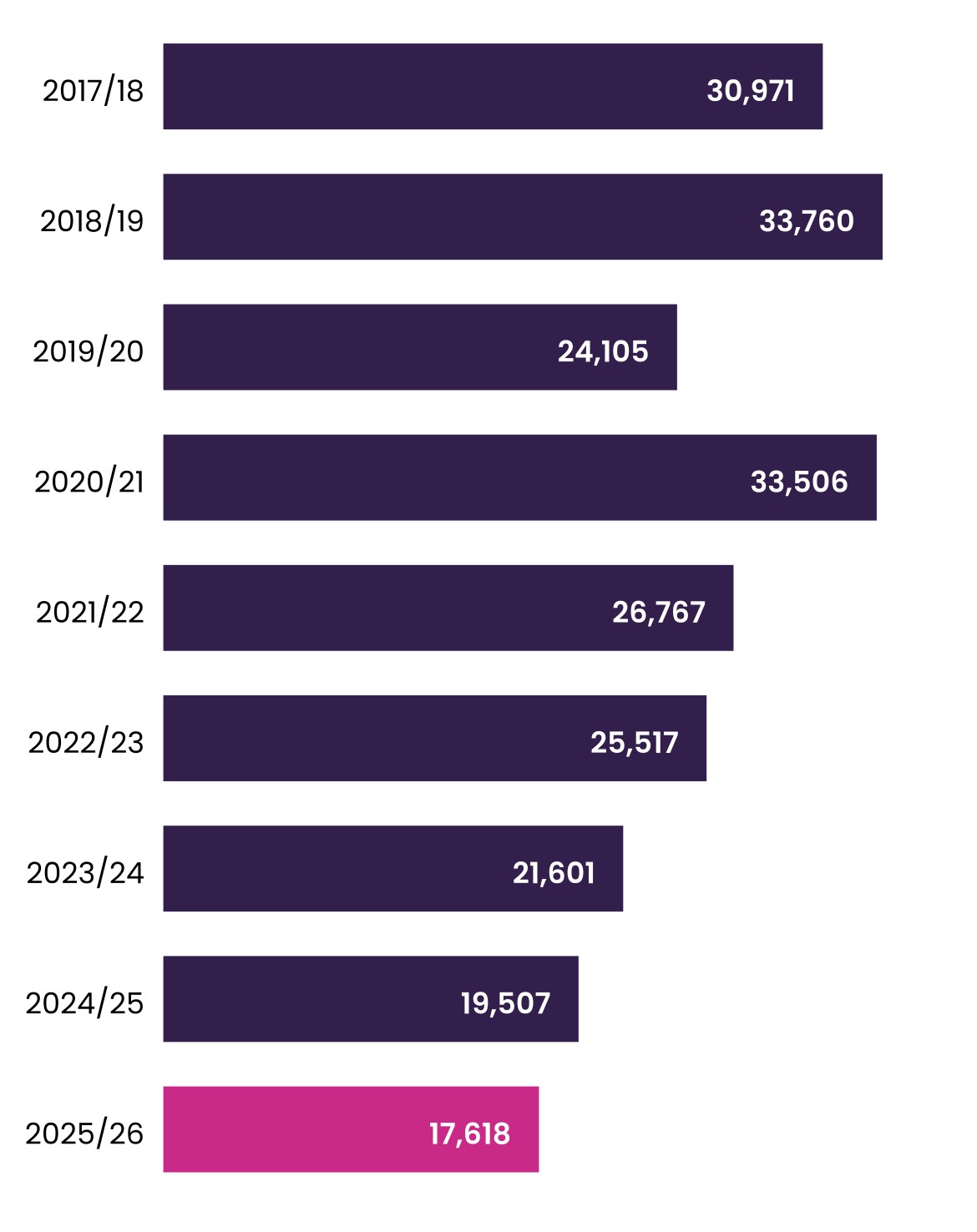
Figure 1 shows a 31 per cent fall in participant numbers between 2022/23 and 2025/26. This marks a further fall in the number of individuals recruited into UK industry trials for the fifth year in a row. Across the UK only 17,618 people participated in commercial contract clinical trials in the NHS, down from 19,507 in 2024/25 and roughly 48 per cent below the 2018/19 peak of 33,760. Fewer participants mean fewer patients with potential access to new medicines, lower NHS revenue and more limited economic value generation.
Details of participants recruited to commercial contract studies per year across English regions and the devolved nations are provided in Appendix 2. In 2025/26, recruitment rose in Scotland (to 3,788 from 3,059) and Northern Ireland (to 154 from 116). It fell in Wales (to 379 from 485) and in England (to 13,297 from 15,847), where it has now declined for a third consecutive year.
Participants recruited to all interventional studies compared to commercial contract studies
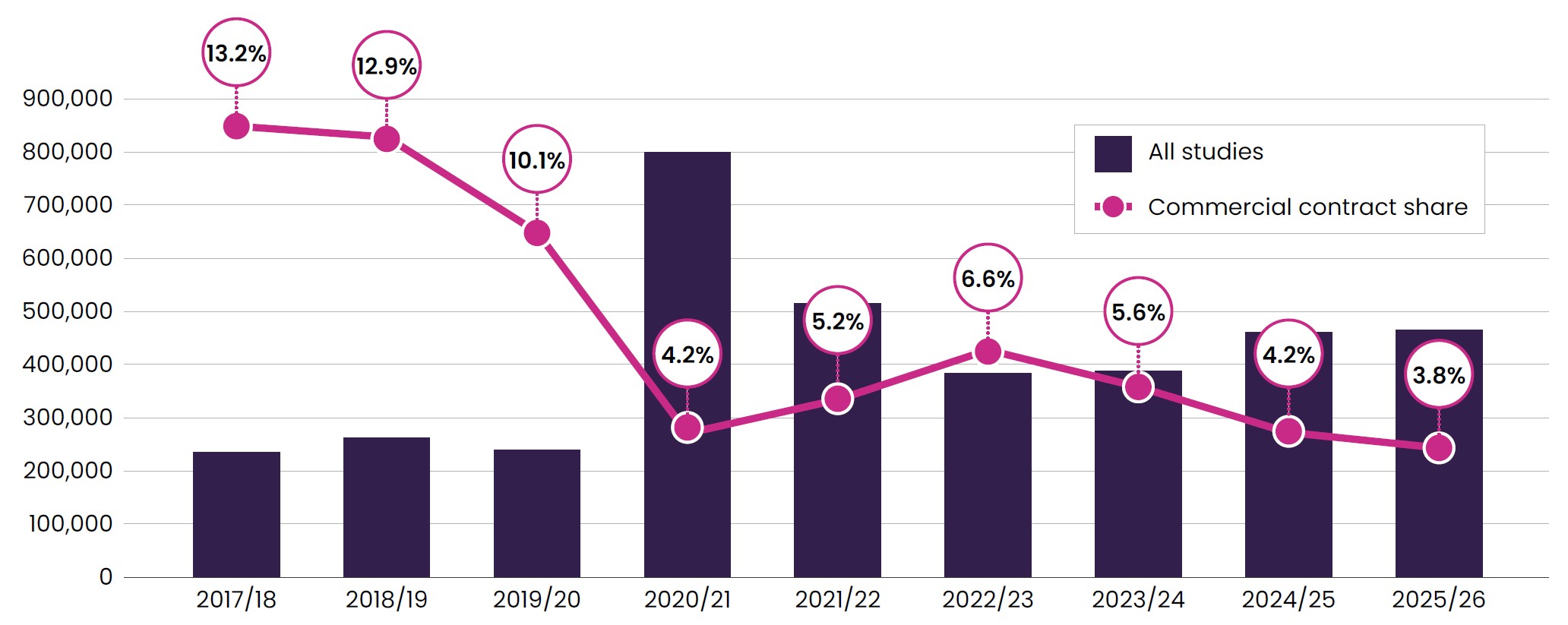
Figure 2 shows total participant recruitment into all interventional trials in the UK (that is, non-commercial, commercial collaborative and commercial contract studies) over time, and the percentage recruited into commercial contract trials. Definitions of these types of trials are provided in Appendix 1.
Overall recruitment to all interventional trials in the UK post-pandemic has grown from 383,835 in 2022/23 to 465,749 in 2025/26. However, in contrast to the overall rise in participant numbers in NHS-delivered trials, recruitment to commercial contract trials in the NHS over the same period has fallen to only 3.8 per cent of overall interventional clinical trial recruitment in 2025/26 (Figure 2). This suggests that the willingness of the public to participate in research is not the factor driving the downward trend in recruitment to industry trials.
Number of commercial contract clinical trials
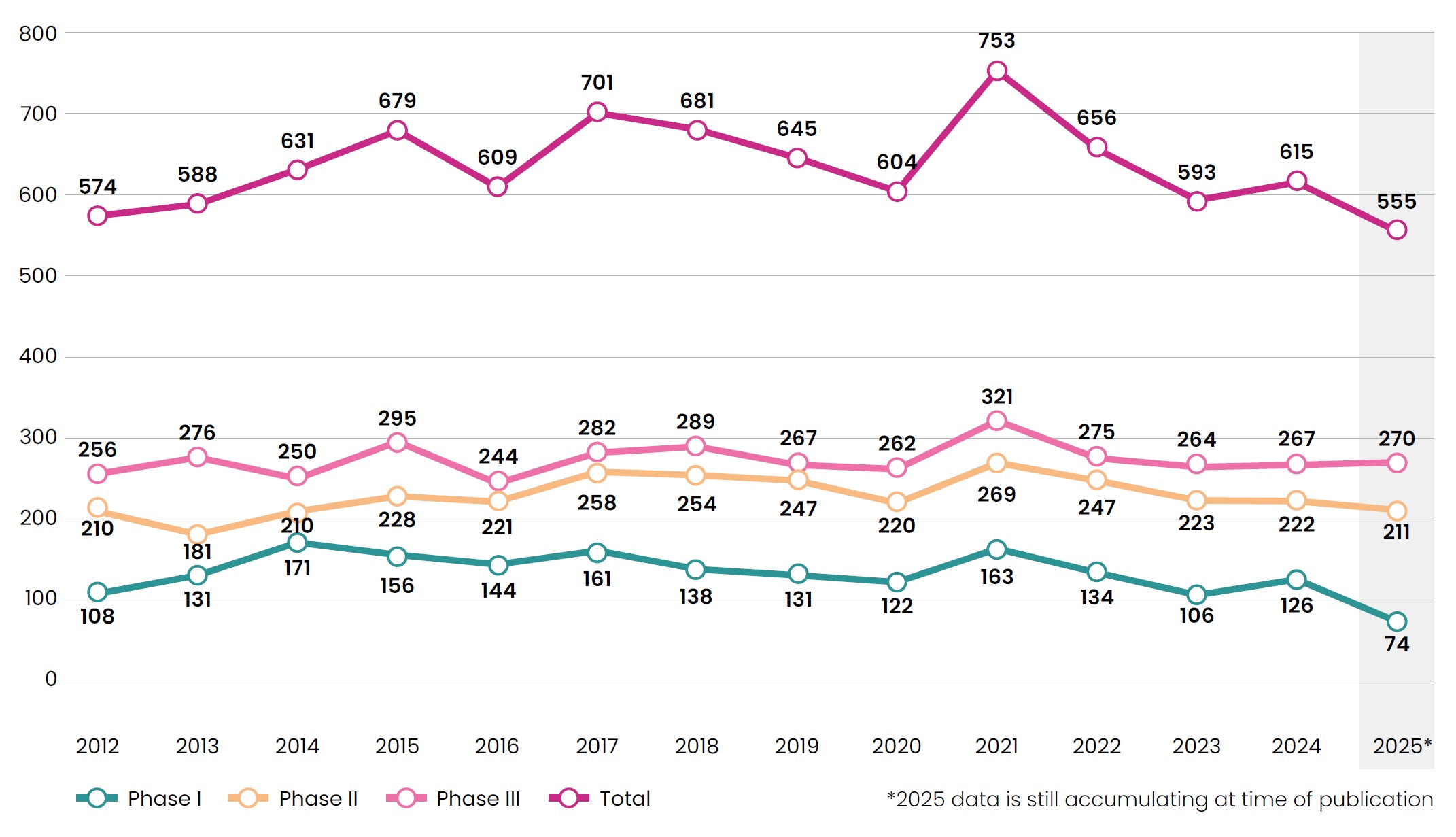
Another way to assess how competitive a country is for clinical research is to compare the number of trials initiated each year with global trends. Figure 3 shows UK trial initiations per year, by phase.
In 2025, the number of commercial contract trials initiated in the UK fell from 615 in 2024 to 555, a decline of 10 per cent. The decline was driven by a reduction in phase I studies. Compared with 2024, phase I fell 41 per cent (126 to 74) and phase II fell 5 per cent (222 to 211), while phase III rose 1 per cent (267 to 270). As set out in the methodology, data for 2025 is still accumulating due to lags in reporting. 2025 data should be considered provisional with minor upward revisions expected.
Figure 3: Number of UK commercial contract clinical trials initiated per year, by phase. Source: Trialtrove, September 2026.
Global ranking by multi-country and single-country trial initiations
Changes in trial initiations in one country need to be considered alongside global trends to understand whether a change is specific to the UK and what it means for the UK’s relative standing and global share of studies. Industry trials are run either as multi-country trials, where sites in more than one country recruit to a single protocol, or as single-country trials, where all sites are located in one country. Figures 4–6 show the global rankings for phases I–III initiations across a combined measure of both multi-country and single-country trials between 2017 and 2025.
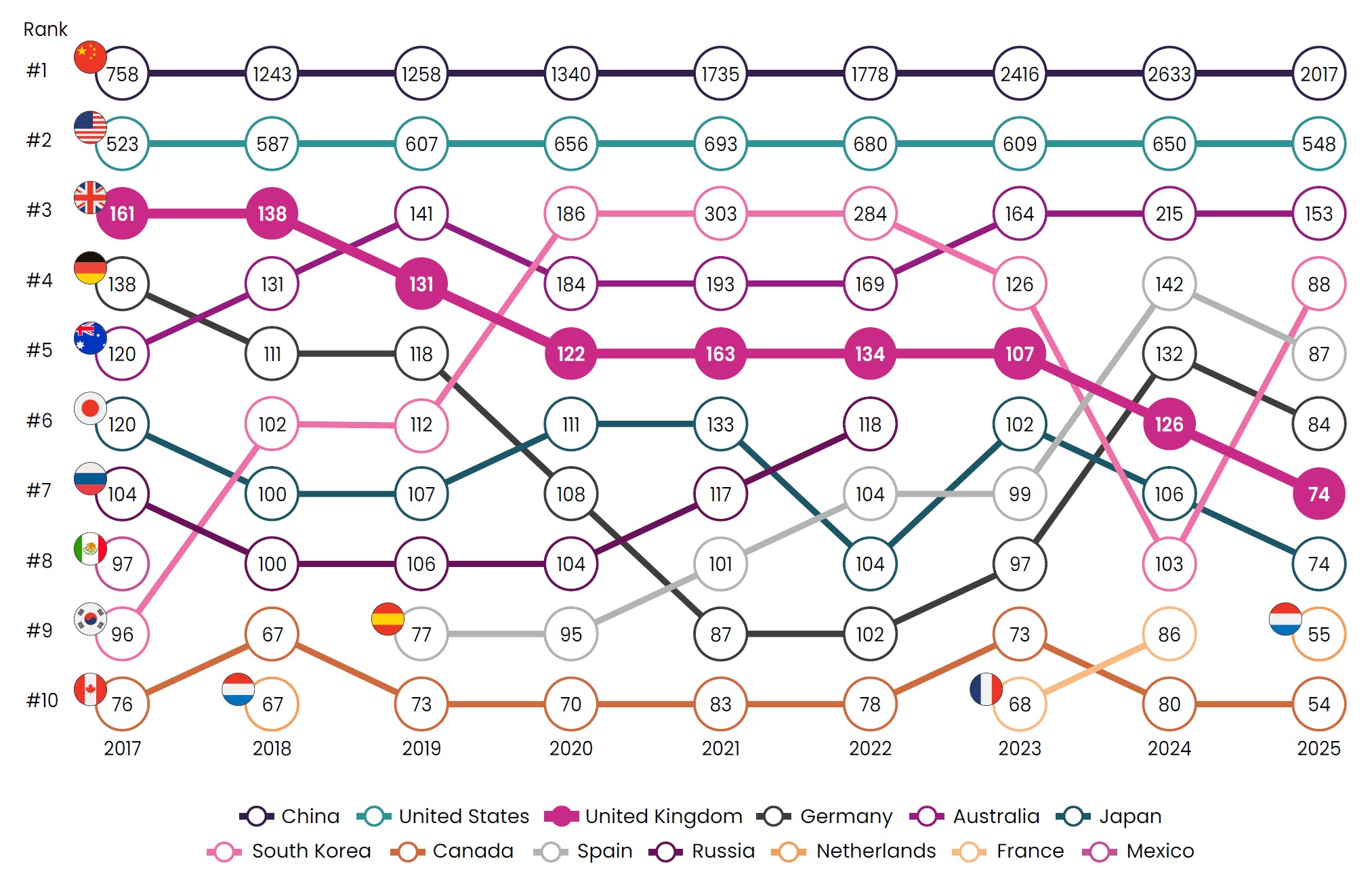
In 2025, the UK dropped one place in the global rankings for phase I trials, to seventh position. Having been sixth in 2024, the UK remains the third-ranked European country for phase I initiations, behind Spain (87) and Germany (84). South Korea rose four places to fourth with 88 initiations, while Japan, on the same 74 initiations as the UK, ranked eighth. China (2,017), the United States (548) and Australia (153) maintained the top three places. UK phase I trial initiations are at the lowest level recorded in the series and a reversal in what has traditionally been an area of UK strength.
Figure 4: Number of phase I commercial contract clinical trials initiated by year, by country (mix of multi-country and single-country trials). Source: Trialtrove, September 2026.
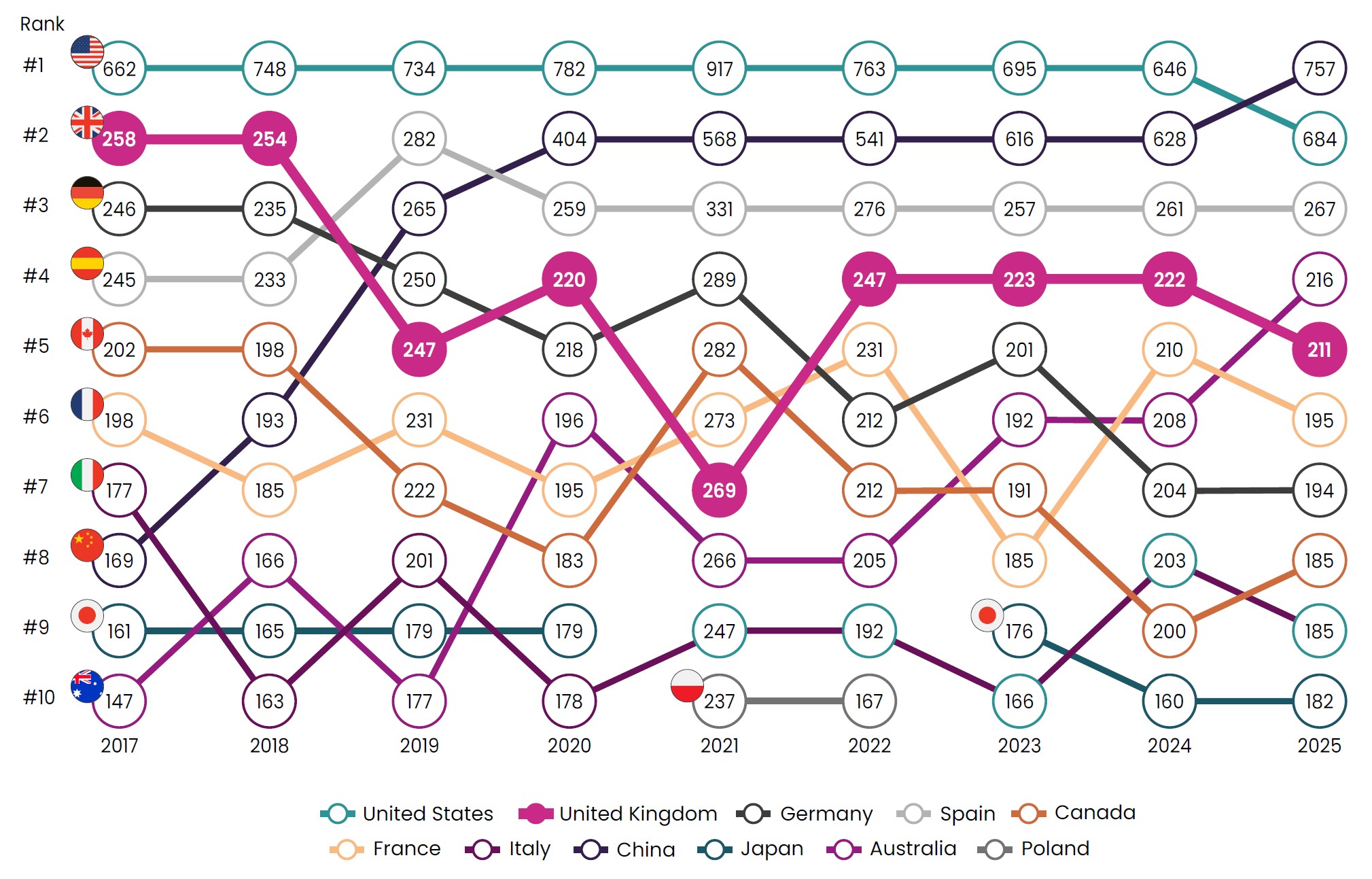
For phase II trial initiations in 2025, China (757) overtook the United States (684), and the UK slipped one place to fifth, overtaken by Australia, which rose two places to fourth with 216 initiations against the UK’s 211 (Figure 5). Spain, third on 267, retained its position as the leading European country for phase II trials.
Figure 5: Number of phase II commercial contract clinical trials initiated by year, by country (mix of multi-country and single-country trials). Source: Trialtrove, September 2026.
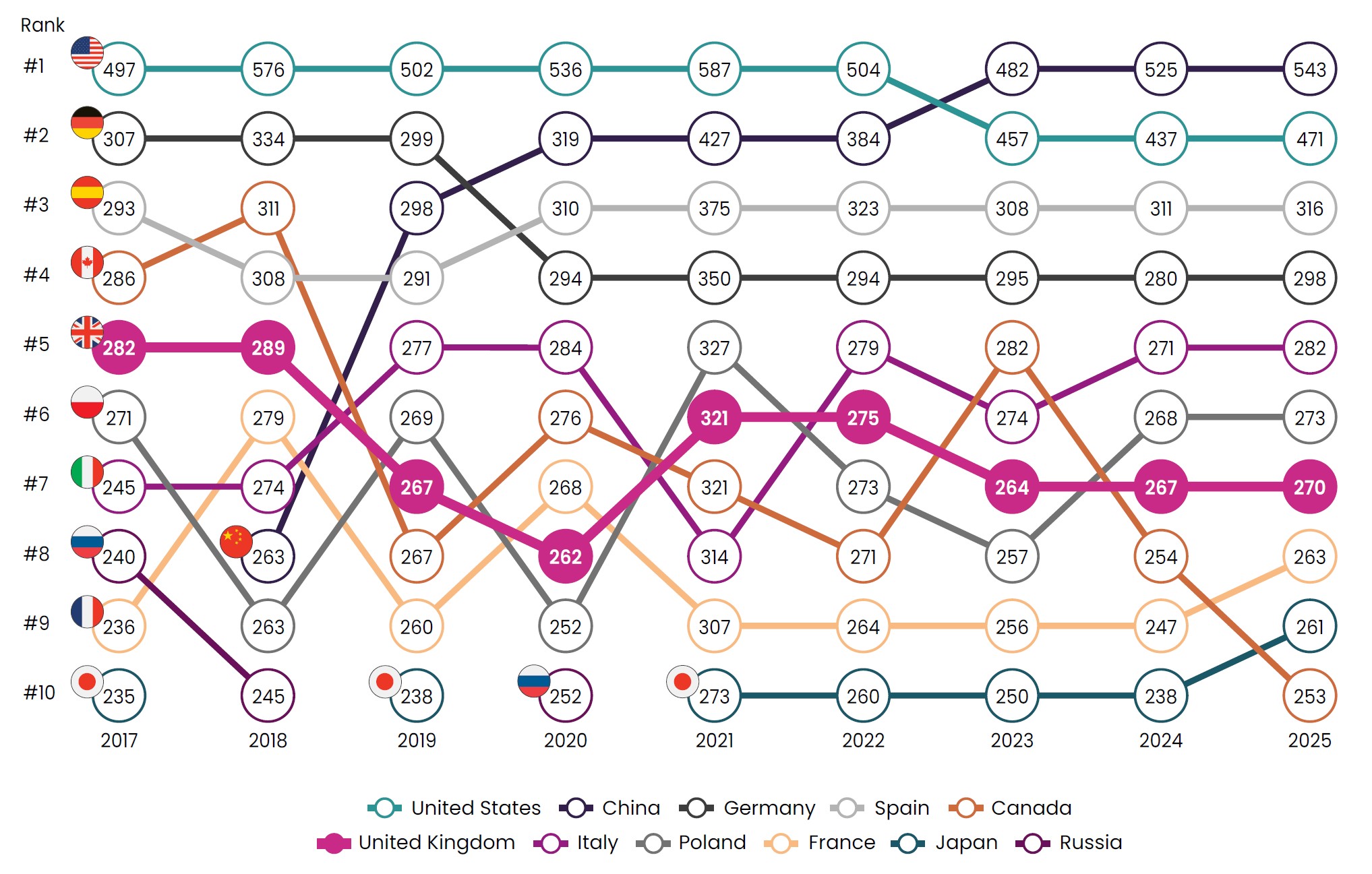
The UK maintained its global ranking for phase III trial initiations at seventh in 2025, on 270 initiations (Figure 6). Among European competitors the UK remains behind Spain (316), Germany (298), Italy (282) and Poland (273), leaving it fifth in Europe at the phase where recruitment numbers are typically largest.
Figure 6: Number of phase III commercial contract clinical trials initiated by year, by country (mix of multi-country and single-country trials). Source: Trialtrove, September 2026.
Global ranking by multi-country trial initiations only
Restricting this analysis to only multi-country trials, and excluding single-country trials, provides new insights. Table 1 shows the 2025 multi-country trial initiation ranking by phase, compared with 2024.
Table 1: Number of commercial contract clinical trials initiated in 2025, by country, by phase, compared with global rankings in 2024 (multi-country trials only). Data source: Trialtrove, September 2026.
Commercial contract clinical trials initiated in 2025 vs 2024, multi-country only
Rank | Countries | Phase I | Δ vs 2024 | Countries | Phase II | Δ vs 2024 | Countries | Phase III | Δ vs 2024 |
|---|---|---|---|---|---|---|---|---|---|
#1 | United States | 159 | (=) | United States | 440 | (=) | United States | 398 | (=) |
#2 | Australia | 74 | (+1) | Spain | 259 | (=) | Spain | 312 | (=) |
#3 | Spain | 68 | (–1) | United Kingdom | 199 | (=) | Germany | 295 | (=) |
#4 | China | 49 | (+2) | Australia | 192 | (+4) | Italy | 279 | (+2) |
#5 | United Kingdom | 45 | (–1) | France | 187 | (–1) | Poland | 271 | (–1) |
#6 | Germany | 44 | (+1) | Germany | 186 | (+1) | United Kingdom | 270 | (–1) |
#7 | France | 42 | (–2) | Italy | 182 | (–2) | France | 262 | (+1) |
#8 | Canada | 39 | (=) | Canada | 174 | (–2) | Canada | 253 | (–1) |
#9 | Japan | 33 | (=) | Poland | 164 | (=) | Australia | 209 | (=) |
#10 | South Korea | 32 | (+1) | Japan | 132 | (+2) | Japan | 208 | (+1) |
Considering only multi-country studies presents a more favourable picture for the UK. It is ranked third for phase II (199), unchanged year on year, which places the UK in the top two for European trials. The UK is ranked sixth for phase III (270), down one place from 2024, and still behind four other European countries. For phase I the UK fell one place to fifth.
Notably, China, which leads every phase on the combined measure, falls to fourth for phase I and does not appear in the top 10 for either phase II or phase III for multi-country-only studies. China initiated 2,948 single-country industry trials in 2025: 1,968 of these trials were phase I, with 625 at phase II and 355 at phase III. Looking at multi-country studies, the United States ranks first for all three phases, and Spain is second for both phase II and phase III, cementing its position as Europe’s leading destination for all phases of multinational industry trials.

Phase I | Phase II | Phase III |


Speed
Multi-country commercial trials recruit globally, so contract negotiation and set-up times directly affect how long a study site is open to recruitment. In a multi-country trial, if a site in another country opens earlier or at the same time and then meets or exceeds its recruitment quota, a UK site may close earlier than expected, sometimes while still in set-up, so no UK patients are recruited. The longer set-up takes, the shorter the recruitment window for UK sites. In 2023, the median time between regulatory submission and the first dose to the first patient was 338 days for commercial trials in the UK, compared with 239 days in Spain.19 These delays damaged the UK’s reputation as a reliable delivery partner for clinical trials. Policy decisions and concerted effort from government, regulators, and the NHS have since produced clear signs of improvement.
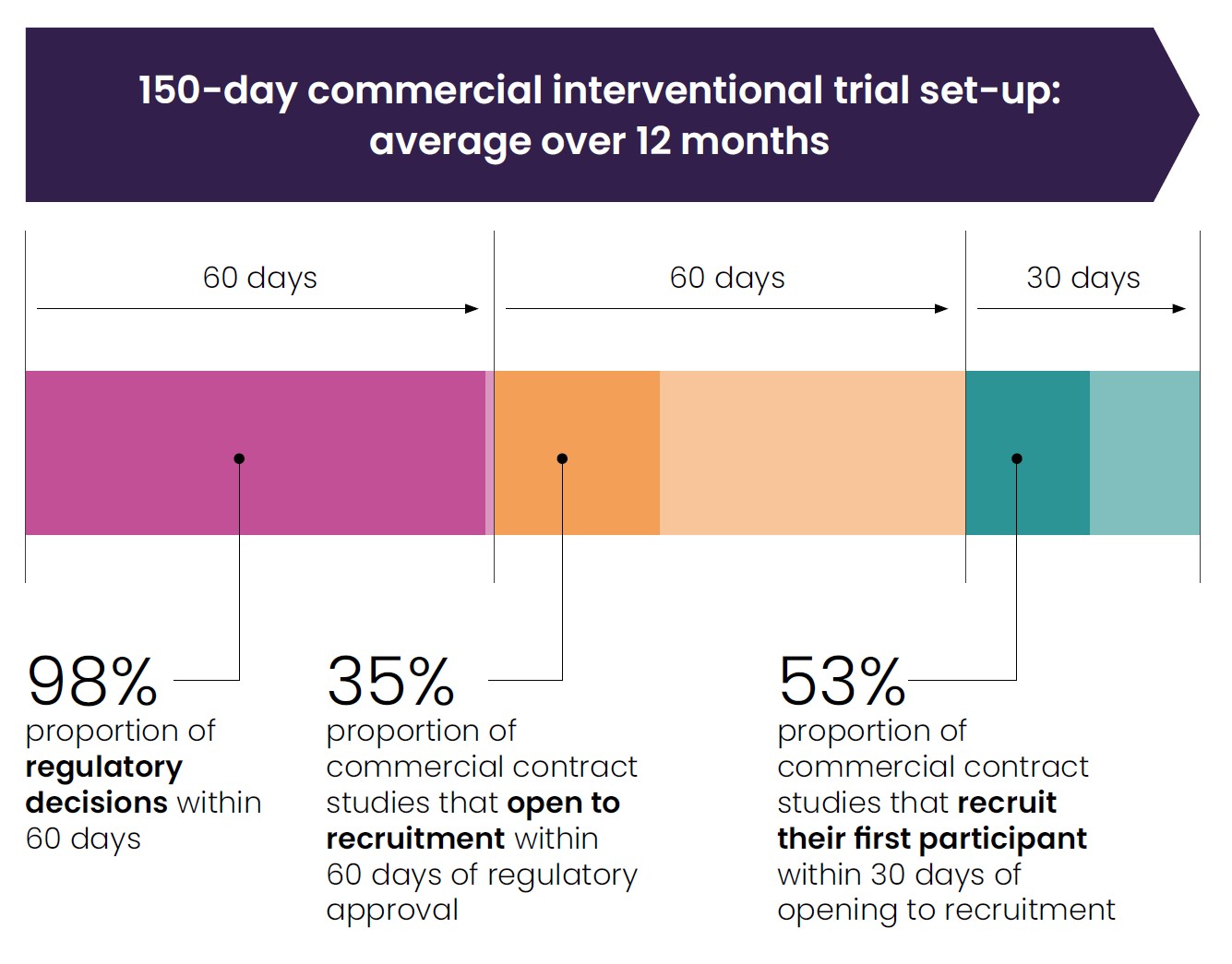
The government committed to reducing commercial trial set-up times to within 150 days by March 20262 measured against three elements:
proportion of regulatory decisions within 60 days
proportion of studies that open to recruitment at the first site within 60 days of regulatory approval
proportion of studies that recruit their first participant within 30 days of opening to recruitment at the first site.
Figure 7: Study setup performance against the 150-day target for commercial contract studies by application month (rare disease, low-recruiting and extension studies excluded, as are those where sponsors requested an exemption). Source: UKCRD October 2026 report.
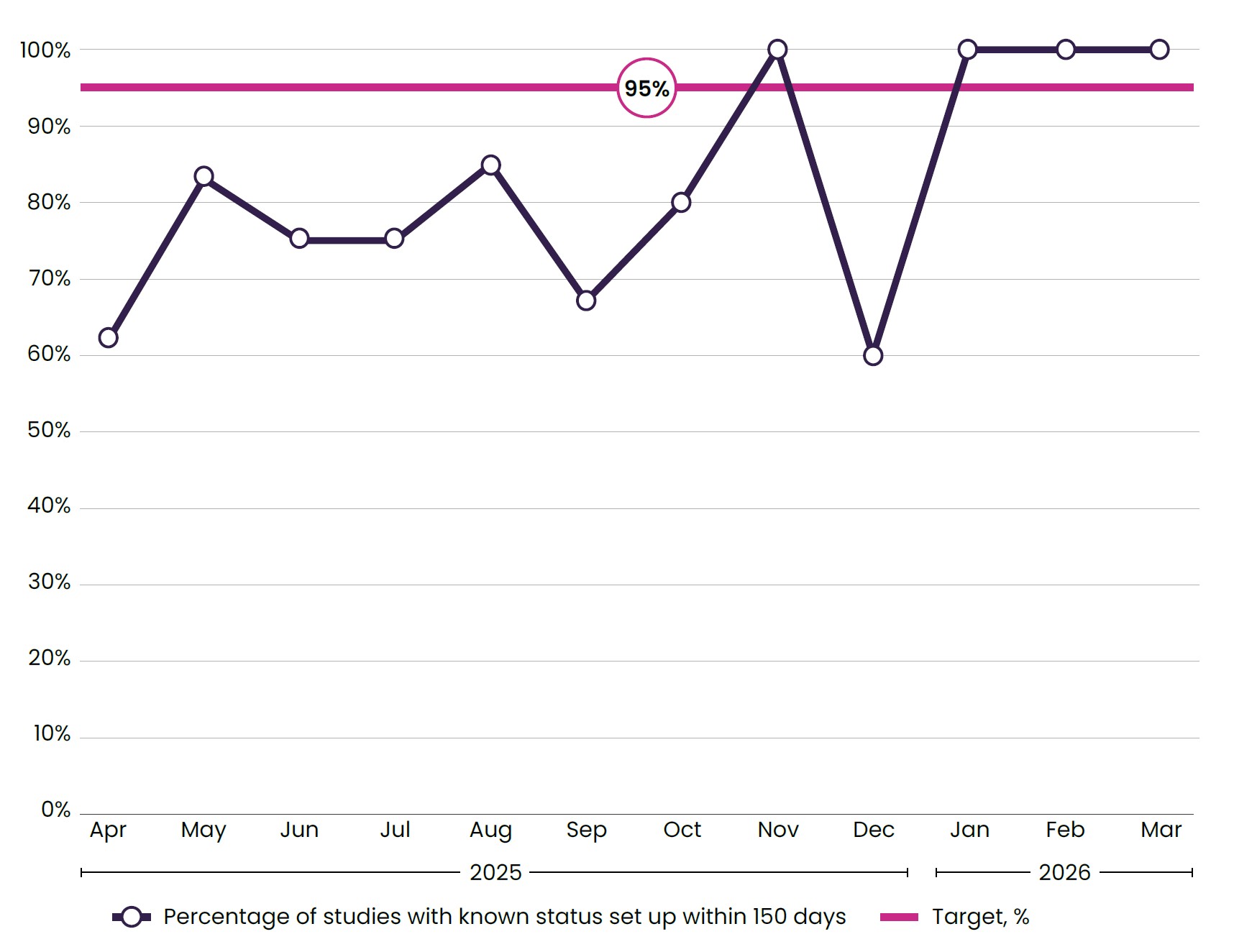
In October 2026, the government reported that the median set-up time for a commercial contract clinical trial has fallen from 157 days (for the period April 2024 to March 2025) to 112 days (for the period April 2025 to March 2026). Figure 7 shows monthly performance against the target for commercial studies delivered in the NHS, which applies to the first site and first patient in a study.
Industry welcomed this as a positive signal of what can be achieved through a concerted approach by the UK clinical research ecosystem. However, this improvement is an early and encouraging milestone rather than an established trend. This data reflects a subset of commercial interventional studies (see Appendix 1).
The data in Figure 7 for April 2025 to March 2026 is based on 104 studies setup within 150 days and 27 not set up within 150 days over this twelve-month period. Assuming that 555 trials were initiated in the UK over 12 months, this data reflects set-up times for approximately a quarter of all interventional commercial contract trials.
Metrics on the different stages of trial set-up that make up the 150-day target are published monthly as part of the UK Clinical Research Delivery (UKCRD) ‘Performance Indicators Report’.7 Due to lags in data reporting, there is an approximate six-month period where the reported data for the status of site start-up and first-participant recruitment is in flux. To review performance using the most accurate and stable data available, the following analysis draws on data extracted from the October 2026 UKCRD performance report.
Average over Jan–Dec 2025
Source: Department of Health and Social Care, UK Clinical Research
Delivery key performance indicators: October 2026 report
Regulatory approval
Regulatory performance has delivered most of the reduction in set-up times to date and now represents a clear area of UK strength. For example, the proportion of studies receiving a combined review decision in the UK within 60 days for August 2026 was 100 per cent. This compares favourably with current European timelines, where the median time from submission of initial clinical trial applications to decision exceeds 100 days.20 In addition, the MHRA is increasingly recognised as a leader in regulatory science with the acceptance of innovative trial designs and methodologies. Engagement routes for advice have also been strengthened with increased capacity meaning wait times have reduced and are improving. Initiatives such as the aligned pathway between the MHRA and the National Institute for Health and Care Excellence (NICE) have been welcomed by industry and offer the opportunity to design clinical development programmes in a way that covers both decision-makers.
The UK’s reported metric includes a ‘clock stop’ rather than a true end-to-end measurement of time. In practice, when the MHRA or the Research Ethics Committee (REC) raises queries on an application, the clock is paused until the sponsor has responded, so the time the sponsor takes to respond is not counted. The published UK indicator therefore measures only the time the MHRA and REC spend assessing the application, so overall approval timelines can vary considerably depending on the nature of the queries raised. This differs from what companies see in their own analyses, which cover the whole end-to-end process from submission to decision, including sponsor response times. It is also not comparable with data from some other markets which include the sponsor timelines.
Study set-up
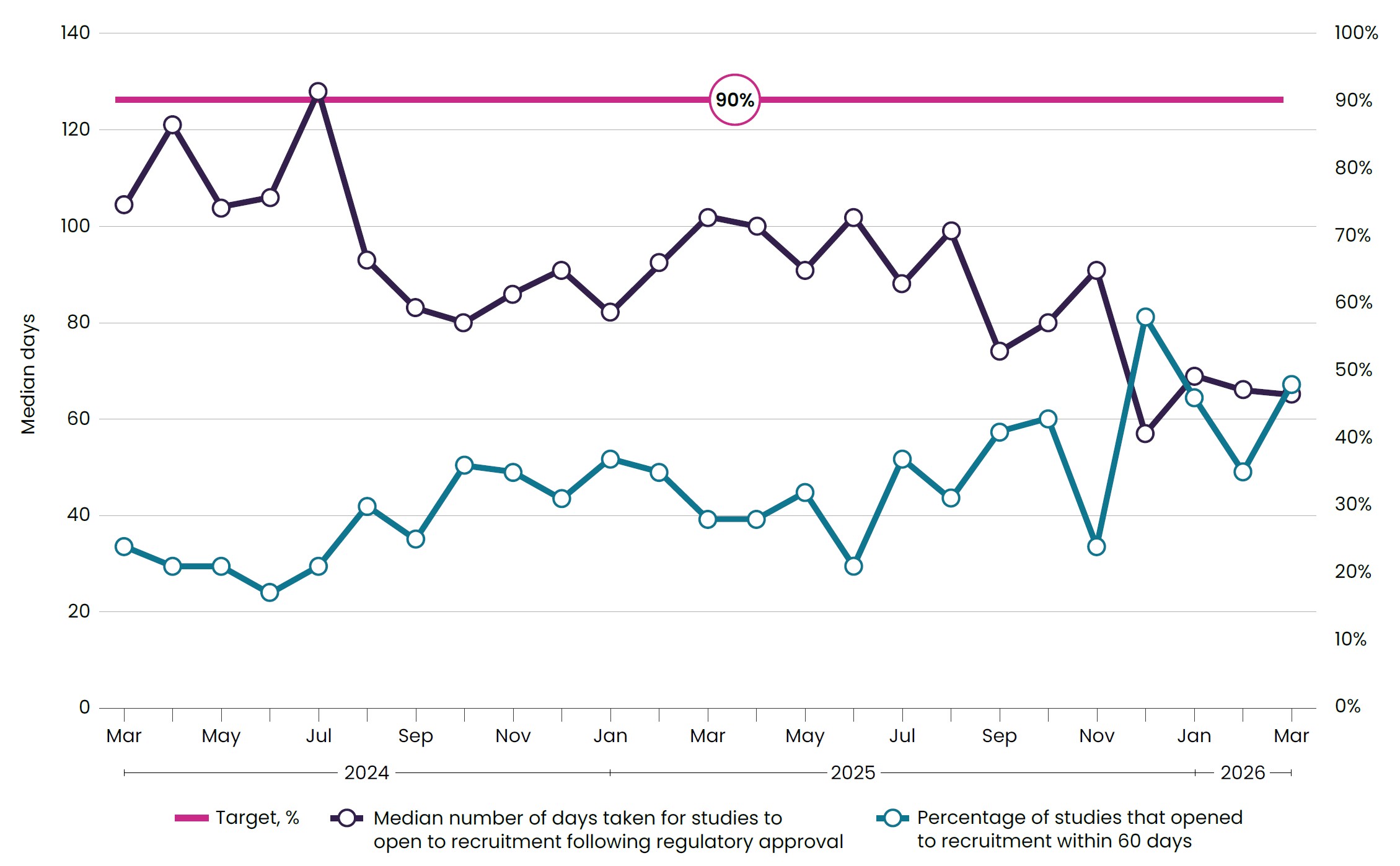
The proportion of industry studies per month that open to participant recruitment within 60 days of receiving regulatory approval, from March 2024 to March 2026, is shown in Figure 8.
An average of 26 per cent of commercial studies opened to recruitment within 60 days post approval in 2024, rising to 35 per cent in 2025, but still below the baseline target of 90 per cent. The direction of travel is nevertheless positive and the five strongest months in the series all fall between September 2025 and March 2026, reaching 41 per cent in September 2025, 43 per cent in October 2025, 58 per cent in December 2025, 46 per cent in January 2026, and 48 per cent in March 2026. The median time to open similarly fell, from 128 days in July 2024 to 57 days in December 2025. This suggests that the multiple reforms to study set-up are beginning to take effect, even if the pace of improvement is not yet sufficient to meet the target.
Figure 8: Proportion of commercial contract studies open to recruitment within 60 days of regulatory approval, and median number of days to open, by month from March 2024 to March 2026. Source: UKCRD October 2026 report.
First participant
The third element of the 150-day set-up target – the proportion of studies recruiting their first participant within 30 days of opening between March 2024 and March 2026 – is presented in Figure 9.
Figure 9: Proportion of commercial contract studies recruiting first participant within 30 days of opening to recruitment, and median number of days to recruit first participant, by month from March 2024 to March 2026. Source: UKCRD October 2026 report
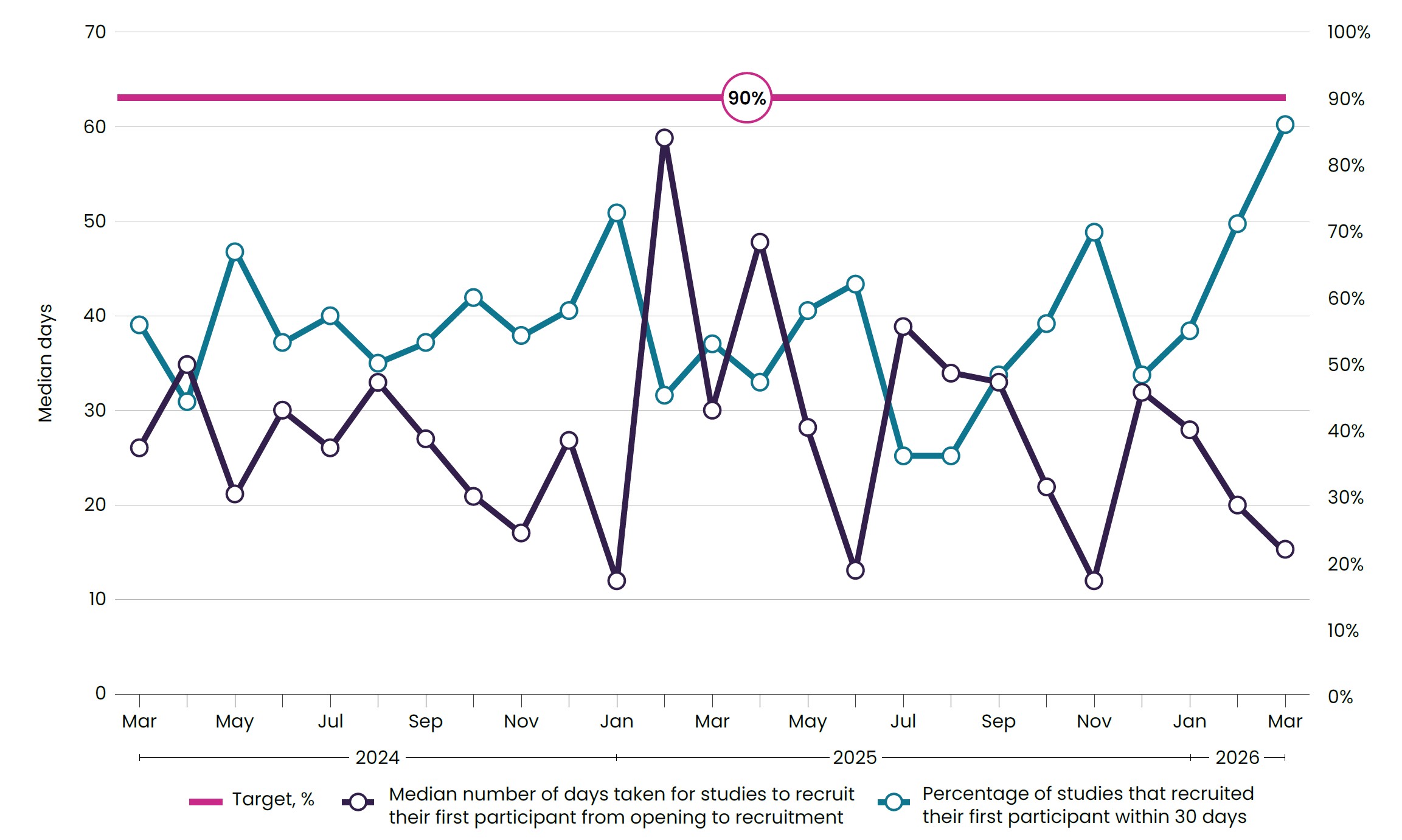
There was considerable month-to-month variability across the series, from a maximum of 86 per cent in March 2026 to a minimum of 36 per cent in July and August 2025.
On average, 55 per cent of industry studies recruited their first participant within 30 days of opening in 2024 and 53 per cent in 2025, showing no year-on-year improvement.
The median time to recruit a first participant tells the same story, with monthly medians averaging around 26 days in 2024 and 30 days in 2025. The most recent months show improvement, with 71 per cent of studies recruiting their first participant within 30 days in February 2026, rising to the series high in March, when the median also fell to 15 days. Sustaining this progress and closing the remaining gap will mean tackling the behavioural and operational challenges that held back recruitment in 2024 and 2025, and there are lessons to be drawn from the sites and studies that have achieved European and Global Firsts.
In 2025/26 the UK achieved 88 first-in-world or first-in-Europe recruitments across pharmaceutical interventional studies, up 44 per cent on the 61 recorded in 2024/25, comprising 24 Global Firsts (up from 15) and 64 European Firsts (up from 46).10 Delivery remains concentrated in a small number of large academic centres, which together accounted for more than 40 per cent of European Firsts. Significantly, 2025/26 also saw firsts achieved in primary care, demonstrating that studies can now be opened quickly outside secondary care settings. Encouragingly, four firsts were also achieved in Scotland, reflecting pockets of strength across the UK.

88
first-in-world or first-in-Europe
recruitments across pharmaceutical interventional studies in 2025/26
Full study activation
For global companies, what matters is not just the first site but the ability to activate all sites in a study promptly. Predictable activation of all study sites is key to efficient recruitment, and a major determinant of whether a country is considered reliable. Figure 10 shows the median number of days taken to activate study sites in the UK, measured from the opening of the first site to the point at which 25, 50, 75, and 100 per cent of all sites in a study were open to recruitment.
Figure 10: UK full study activation in days (median) in 2022, 2023 and 2024. Data source: Clarivate, August 2026.
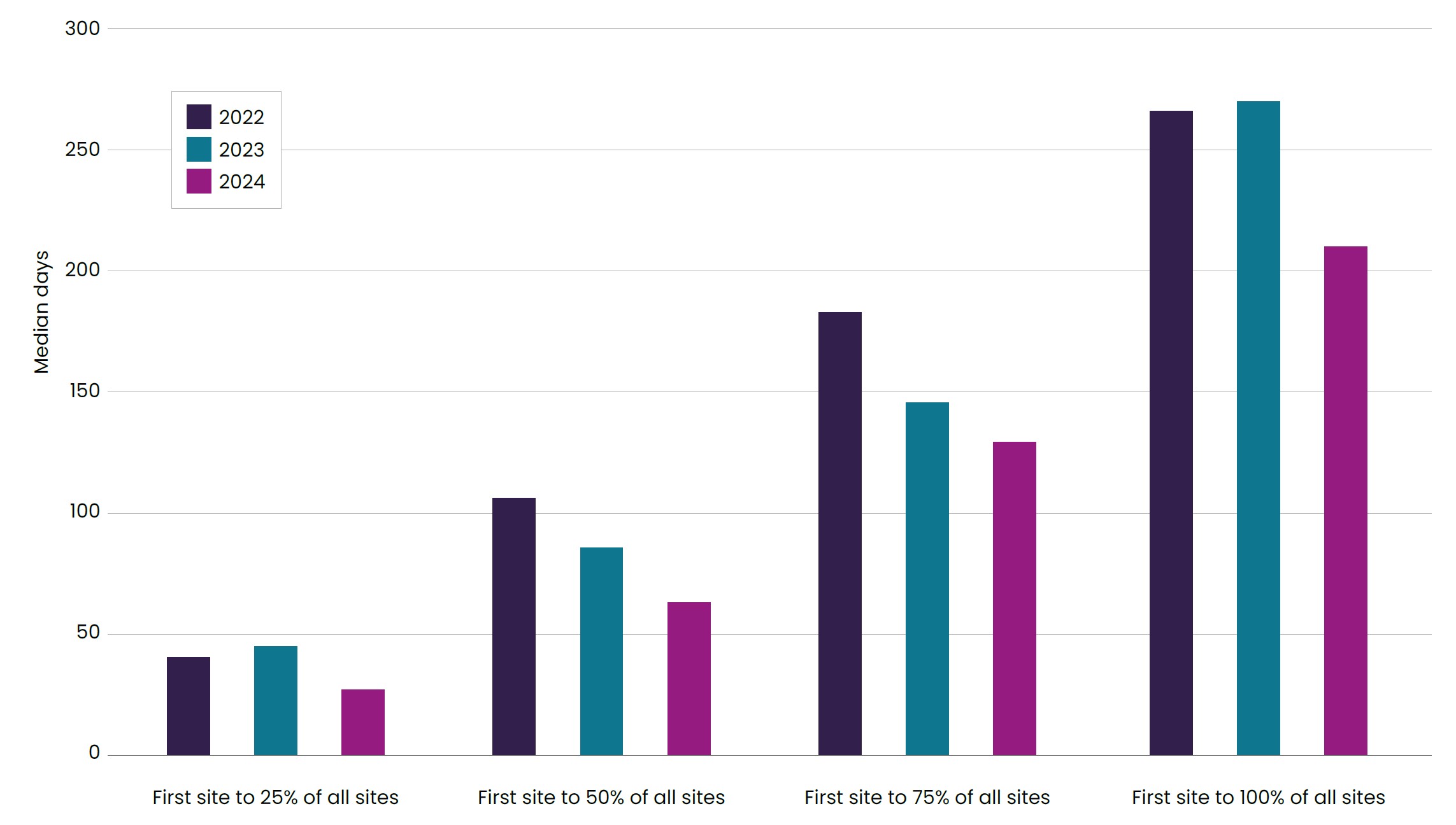
This data demonstrates how the last site in a study may open 200 days after the first, meaning there can often be a year between regulatory submission and all sites in a study opening. The UK has moved in the right direction on this measure, with notable improvement in all site activation times between 2022 and 2024 (the latest available internationally comparable data point).
It should also be noted that the lag in reported data means that concerted efforts in 2025 and 2026 to accelerate set-up and activation times are not yet reflected in this data. However, this measure of whole-study activity is more reflective of the performance data pharmaceutical clinical operations leaders will use when deciding where to place trial activity and therefore provides important insight into the UK’s perceived competitiveness.
Why does full study activation matter?
The aim of a multi-country commercial trial is to gather sufficient clinically relevant data from an appropriate number of participants. A single site is unlikely to deliver this quickly, so recruitment is shared across many sites in several countries against one global target.
For example, a trial requiring 600 participants across 30 sites in six countries closes to recruitment once that target is met. If sites in Spain and France are activated within a month, while UK sites take more than 200 days to open, those countries may recruit a larger proportion of participants first, leaving UK sites with few places or none, and UK patients with fewer opportunities to take part. Companies therefore place trials in countries where all sites can be activated promptly and predictably.
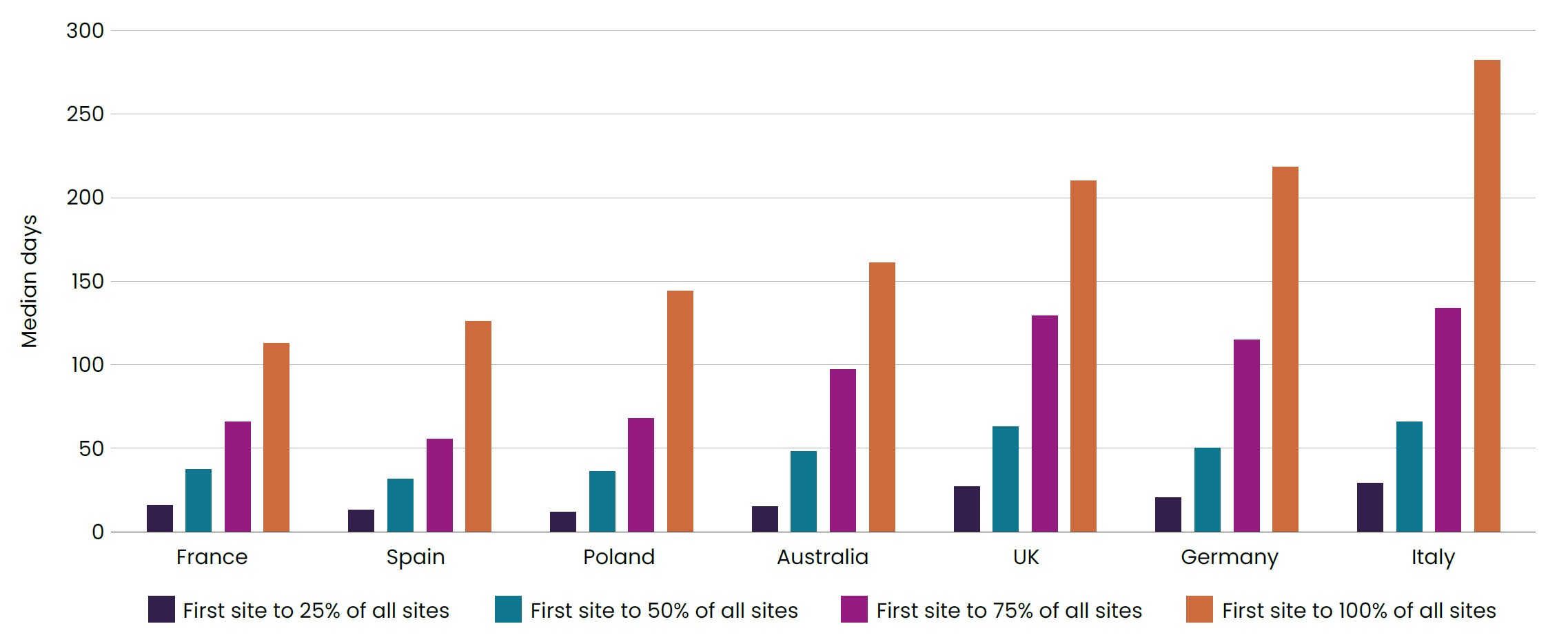
Figure 11 compares the 2024 UK activation times with a group of key comparator countries. The same milestones are used throughout: the median number of days from the opening of the first site to the point at which 25, 50, 75, and 100 per cent of all sites in a study were open to recruitment.
Despite the UK’s domestic performance for full site activation trending in the right direction, Figure 11 demonstrates that in 2024 there was still a substantial gap between the UK and the most efficient comparator markets. Crucially, the gap between the UK and the fastest nations grew at each stage of activation, from first to final site. At the point where 25 per cent of sites were open, the UK lagged the fastest comparator, Poland (12 days), by 15 days; by full activation the gap had widened to 84 days behind Spain (126 days) and 97 days behind France (113 days), with the UK median duration from first to final site activation lasting 210 days. The UK nonetheless compares favourably with some other major markets, activating all sites faster than Italy (282 days) and marginally faster than Germany (219 days). Full data for all comparator countries is available in Appendix 3. While this data represents only a subset of trials, it demonstrates the need for concerted effort and emphasis on all site activation, not just the first.
Figure 11: Full study activation in days (median) by country in 2024. Data source: Clarivate, August 2026.
Commercial Research Delivery Centres (CRDCs)
CRDCs have increased UK capacity for delivering industry-sponsored clinical trials and form a key pillar of the £300 million Clinical Trials Investment Programme under VPAG – a public-private partnership between government and the pharmaceutical industry.
CRDCs outperform the wider UK ecosystem
Across all three clinical trial delivery measures

Faster study
set-up

More sites
opening on time

Earlier first-patient
recruitment
 Dedicated commercial capability delivers results
By September 2025 the 35 CRDCs across the four nations had come together under the CRDC UK Network. Primary care is integral to the model, extending commercial research beyond hospitals and into the community. Investment in primary care supports a more decentralised model of delivery that brings trials closer to patients and opens participation to people who live in more remote areas or who may find it more difficult to get involved in trials at a hospital site.
Figure 12 shows how commercial contract studies delivered through the CRDCs in financial year (FY) 2025/26 compared with studies delivered by their host trusts and across the wider UK.
This emerging performance data indicates that the CRDCs are outperforming the wider UK ecosystem on all three set-up and delivery measures, and that investing in commercial capability delivers materially faster set-up and first-patient recruitment.
Figure 12: CRDCs performance data FY 2025/26 (as of May 2026).
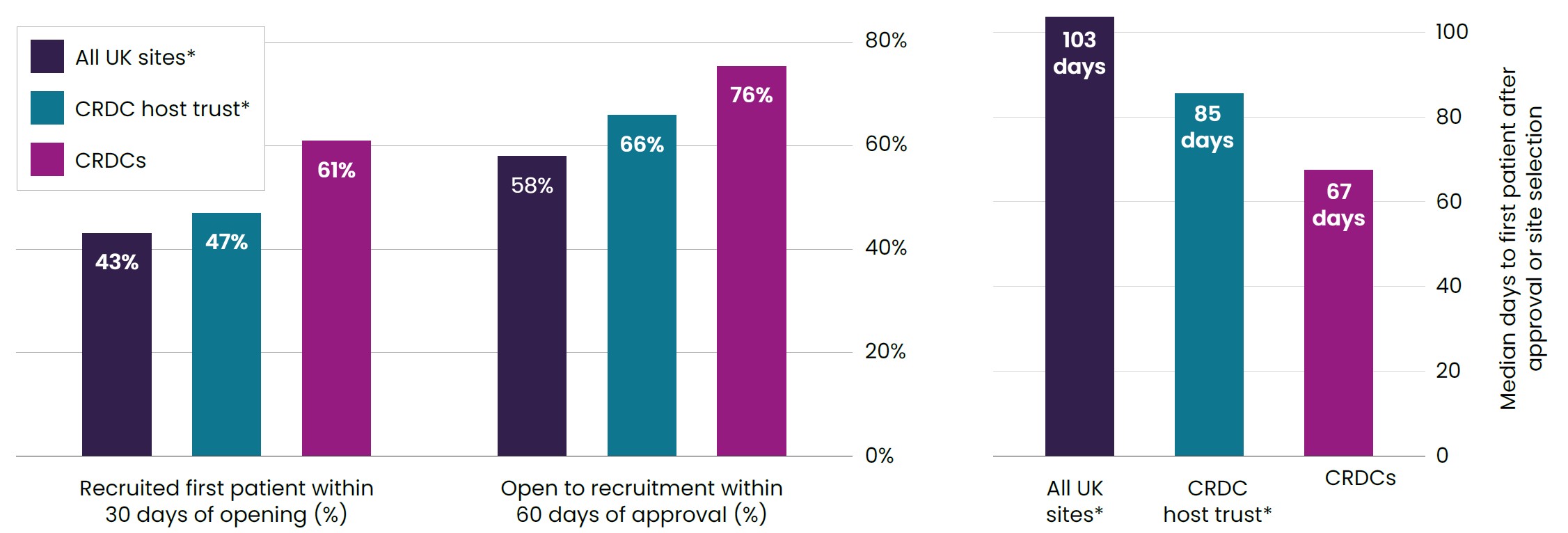
*CRDC host trust and All UK sites figures include CRDC performance
UK competitiveness by therapeutic area
To further understand the UK’s strengths and competitiveness in delivering commercial trials, we broke down the proportion of phase II and III industry trials initiated in the UK by therapeutic area. The top five therapeutic areas for trial initiation in the UK were oncology (35 per cent), autoimmune and inflammation (21 per cent), metabolic and endocrinology (15 per cent), central nervous system (14 per cent), and cardiovascular (10 per cent).
To compare the UK’s global competitiveness in these five areas of therapeutic strength, the proportion of global phase II and phase III trials in each area that included at least one UK site was examined. To understand how these positions have changed over time, each area was tracked across the four years from 2022 to 2025.
Industry clinical trials are carried out as either multi-country or single-country trials. European markets (including the UK) have historically been more dependent on, and successful in attracting, arms of multi-country trials, whereas China’s strength has predominantly been in single-country trials. One indicator of a country’s competitiveness is whether it is chosen as the location for at least one site in a global trial. In each therapeutic area, this can be measured as the proportion of global trials initiated each year that include at least one site in the country.
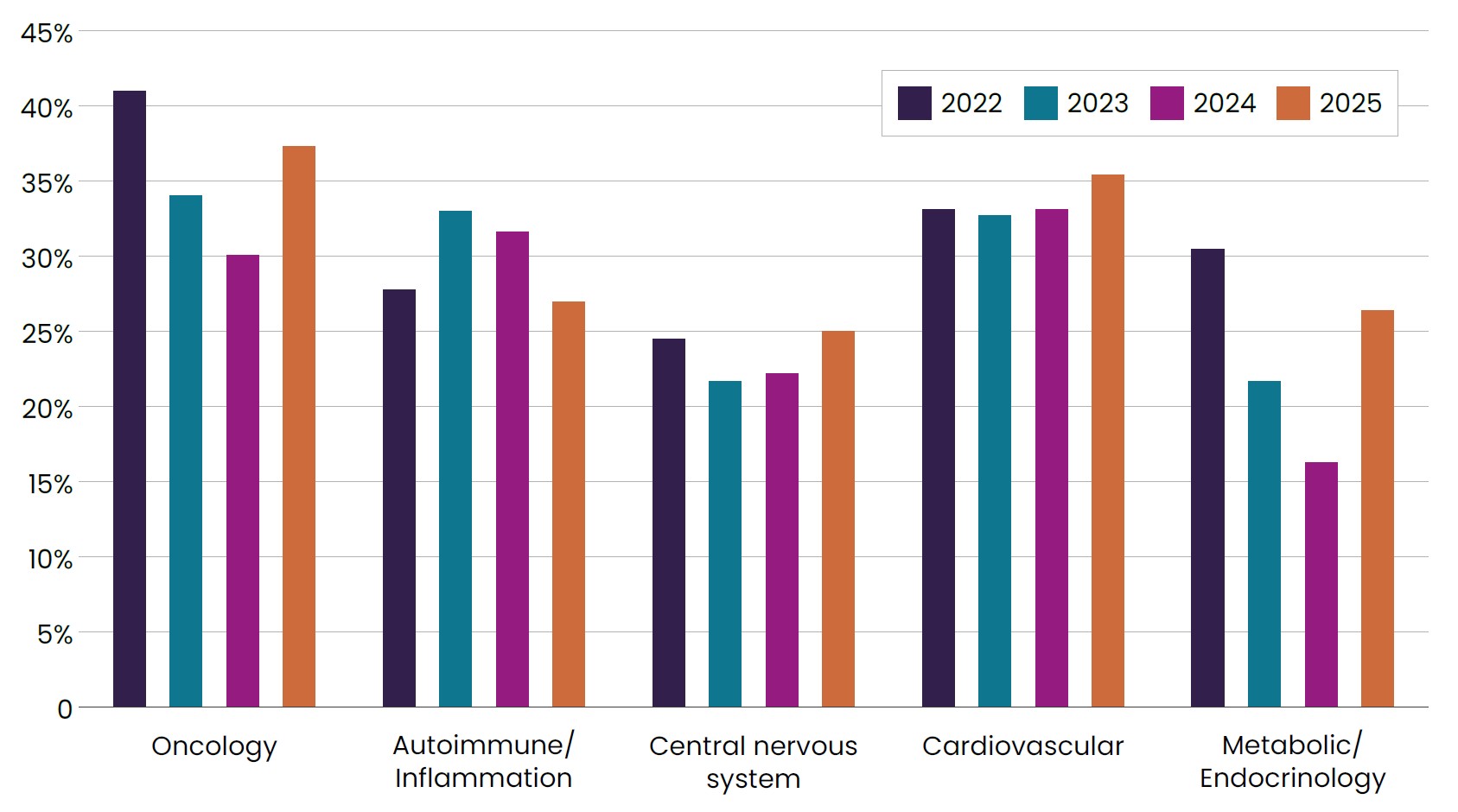
A summary of the changes in the proportion of trials initiated with sites in the UK’s strongest therapeutic areas over the past year is shown in Figures 13 and 14.
Over the past year, the most notable gain was a substantial increase in the UK share of global phase III metabolic trial initiations, while oncology also strengthened, with increases in both phase II and phase III trials. Cardiovascular trials remained stable across both phases. By contrast, autoimmune and inflammation trials declined at both phase II and phase III, and phase II central nervous system trials fell sharply, in contrast to a modest increase at phase III.
Figure 13: Change in the proportion of phase II global initiated trials across therapeutic areas, with at least one site in the UK, between 2022 and 2025. Source: Trialtrove, August 2026.
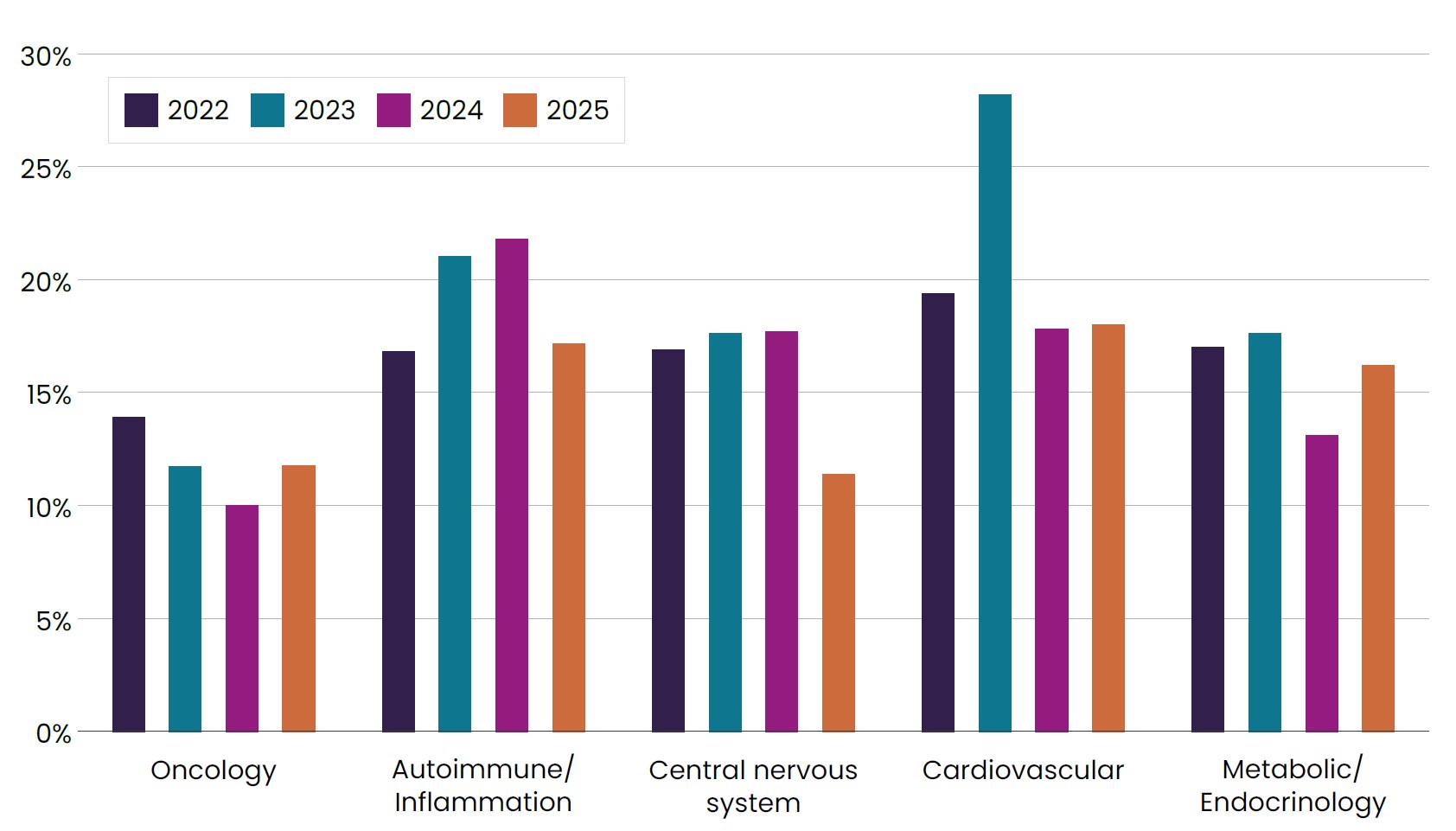
Figure 14: Change in the proportion of phase III global initiated trials across therapeutic areas, with at least one site in the UK, between 2022 and 2025. Source: Trialtrove, August 2026.
Analysis and recommendations
Over the past year, there is demonstrable evidence that the government’s commitment to restore the UK’s international competitiveness in clinical trials is beginning to improve study set-up times. Recent decisions to simplify national contracting are already delivering real benefit and more trials have recruited their first global or European participant in the UK. However, improvements in set-up performance will only deliver the desired health and economic benefits when UK participants are enrolled and able to benefit from these studies. With ever-increasing international competition, the necessary focus and signs of improvement on speed of set-up must be accompanied by efficient end-to-end study delivery and reliable recruitment. The political will exists, and increasingly so too does the technology and infrastructure to enable this transformation. But delivery requires whole health system alignment, prioritisation and incentivisation.
Improved National Contract Value Review process
Costing and contracting was one issue slowing the set-up of industry clinical trials in the UK. The National Contract Value Review (NCVR) is a standardised UK-wide approach to costing and contracting for industry clinical trials. Between 2022 and 2025, the NCVR cut the average commercial study set-up by a third.21 However, variations in site costing and use of the escalations pathway (a route that allowed subsequent sites to challenge initial costing assessments) meant fragmented, complex, parallel negotiations still occurred for some studies. Since 1 July 2026, a streamlined NCVR process introduced an accelerated Lead Site Study Resource Review, with quality assurance embedded up front (via a second reviewer) and the removal of individual site-level escalations. This improved NCVR process has reduced median study budget finalisation time from 65 to 25 days, a 62 per cent reduction – delivering important added efficiency in overall study set-up.22
Set-up, recruitment and health system prioritisation
The findings of this report raise concern about the UK’s ability to translate a focus on study set-up into reliable recruitment. In 2025/26, recruitment of patients into interventional pharmaceutical trials in the NHS fell for a fifth consecutive year, with only 17,618 people taking part.
This decline in recruitment to pharmaceutical commercial contract trials (fully funded by industry) contrasts with growing recruitment to all interventional studies in the NHS, which include the collaborative studies sponsored jointly by industry and non-commercial organisations and those funded solely by a non-commercial organisation such as a charity, university, or public funder. Overall, UK participation in interventional studies in the NHS grew from 383,835 people in 2022/23 to 465,749 in 2025/26, while the proportion of people in commercial contract trials fell from a high of 13.2 per cent in 2017/18 to only 3.8 per cent in 2025/26. These trends demonstrate that there is not a lack of willing trial participants within the NHS, but that prioritisation at health system level to deliver and recruit patients to industry clinical trials continues to fall relative to non-commercial studies.
In 2022, industry clinical trials contributed £7.4 billion in gross value added (GVA) to the economy and supported 65,000 jobs, generated £1.2 billion in direct revenue for the NHS and supported 13,000 NHS jobs and prevented an estimated three million sick days.1 This decline in recruitment is therefore not only a lost opportunity for patients and the NHS but also for the UK economy.

£7.4bn
in gross value added to the UK economy
International competition is intensifying
In 2018, the UK was Europe’s leading location for commercial contract phase I and phase II trials and ranked third, behind Germany and Spain, for phase III. Several countries have taken deliberate policy decisions to increase their share of commercial contract trials and reinvested this income in their research infrastructure and workforce. Sponsors are increasingly selecting sites using data on delivery performance, not just established relationships with key opinion leaders.
Decisions on where to open trials are taken globally, with no guarantee of a UK allocation. The speed of study set-up is a major factor in attracting global clinical trials. Delays can cause studies to close early if recruitment targets are met sooner at competing global sites. Fast regulatory approval is now a clear UK strength. However, the UK faces growing competition from countries such as China, where approvals are increasingly rapid, and from Europe, where measures set out in the European Biotech Act aim to significantly speed up trial approvals. Elsewhere, regulatory approval and study set-up often run in parallel, whereas in the UK sites tend to wait until after regulatory approval before setting up. This concurrent approach helps to condense overall setup times, with sites able to open soon after approval, providing markets where this is commonplace with a competitive advantage over the UK.
Ensuring greater focus on end-to-end trial delivery
Set-up performance, while improving, also remains below target, with too few studies having all their UK sites, not just the first, opening to recruitment within 60 days of approval or recruiting their first participant within 30 days of opening. Government statistics currently only measure recruitment of the first patient at the first site. The broader site activation data in this report shows substantial time lags between first and last site opening, and that the UK has not yet achieved a consistent, system-wide reduction in study start-up times. The same focus currently placed on opening the first site should apply equally to activating all subsequent sites as quickly as possible. As the report outlines, if other international sites are opening and recruiting at a more efficient rate and generating the required regulatory data, UK sites will close to recruitment or not open at all, meaning fewer opportunities for eligible participants to enrol.
International rankings
In 2025 the UK was ranked seventh globally for phase I trials. China dominates single-country phase I trials and is increasingly taking part in multi-country phase I trials. This is likely to translate into multi-country phase II and phase III trials in future years as more global companies establish operations in China and Chinese-headquartered companies expand into other markets. In phase II the UK is ranked fifth, retaining its position as second in Europe. In phase III the UK retained its global ranking at seventh, suggesting that its later-phase competitiveness is holding steady rather than retreating or improving. For phase III studies the UK remains behind its European neighbours: Spain, Germany, Italy and Poland – the European markets that have invested in the workforce and infrastructure necessary to deliver commercial trials to time and target.
Addressing this sustained decline in UK recruitment and the UK’s current global position requires concerted action across three areas: full study set-up and recruitment; improving medicines access and adoption; and ensuring the self-sustainability of the UK’s research delivery infrastructure.
Recommendations
Create new incentives that increase recruitment and consistent full study delivery
Recommendation | 1 | |
|---|---|---|
Expand the UKCRD metrics and research delivery funding to support efficient end-to-end study delivery and incentivise higher and more predictable recruitment. | ||
The 2023 Lord O’Shaughnessy review of commercial clinical trials in the UK recommended doubling recruitment by 2025, with a further doubling by 2027. Instead, recruitment in the NHS has fallen in each of the last five years, including a 31 per cent fall since 2022/23. In 2025 the government recommitted in the ‘Life Sciences Sector Plan’2 to double commercial trial participant numbers by 2026, and to double these numbers again by 2029. To meet these commitments, governments across the UK should develop a strategic action plan to increase recruitment, reflecting the complexity of commercial research, alongside new incentives. This action plan should set clear interim milestones so that progress can be assessed year on year, with an explicit focus on whole-study delivery and equal accountability and incentives for recruiting both the last and first participants. This action plan must also ensure that recruitment is prioritised across the full portfolio of therapeutic areas, and that metrics and incentives are equally effective at driving recruitment in small cohort studies, such as rare disease and precision oncology, as they are in large population studies.
Higher targets will only be met if the incentives for sites and individuals change. Under-recruitment often reflects several interconnected factors, including research workforce gaps, slow site activation, and the wide variation in performance between sites – factors that are often addressed in isolation despite them creating the same ultimate challenge. The National Institute for Health and Care Research (NIHR) Industry Hub and CRDC Network are providing new opportunities for companies to engage in early strategic conversations on their forthcoming pipelines, enabling new sites to be considered for trial placement and helping the UK delivery ecosystem prepare in a more coordinated way for emerging modalities or trial designs.
However, current performance reporting (to time and target) has deterred NHS organisations from setting high recruitment targets for fear of missing them and losing associated funding, leading sites to commit to progressively smaller recruitment numbers. Companies report to the ABPI that as many as one in 10 sites recruit no participants and between 40 and 50 per cent of sites recruit only one or two participants, so the recruitment targets that UK sites set and achieve are no longer internationally competitive. Companies invest substantial up-front costs to set up a study in the NHS, so under-recruitment makes the UK a far more expensive place to undertake research, with a higher per-patient cost than markets that consistently deliver or exceed their recruitment targets.
A new incentive framework should be introduced to increase recruitment at NHS site level. Achieving the ambition to ‘double and double again’ recruitment will require all sites in a study to focus on their enrolment period, rate and targets. Stronger accountability mechanisms and financial incentives that reward or recognise full recruitment performance and over-recruitment should be developed rather than penalising sites for setting ambitious targets. Current mechanisms reward first-site setup times, which should now be the standard expectation. Enhancements should use existing levers and data sources to reward strong, fast performance across all sites in a study and ensure full study delivery.
“UK sites recruit on average across trials around two patients per site – this is a trend we have seen over at least a five-year time frame. When compared to our EU counterparts such as Spain, Germany, France and Italy who are recruiting around three to four patients per site, this makes the UK seem unproductive and is what drives the perception of it being more expensive.”
ABPI member
Recommendation | 2 | |
|---|---|---|
Deliver a new UK-wide data-enabled clinical trials service to support more efficient patient identification and enrolment, making the UK a more efficient and attractive global destination for commercial clinical trials. | ||
The NHS holds a structural advantage that few other health systems can match: near-universal population coverage under a single provider, supported by linked longitudinal data. Yet this advantage is not being converted into recruitment performance. The Health Data Research Service offers an opportunity to deliver the data-enabled identification of eligible patients. GP records capture 90 per cent of a person’s interactions with the NHS. As described in the ABPI’s 2026 report on data-enabled clinical trials,23 the current approach is fragmented, but the ambition should be a data-enabled clinical trial function that protects patient confidentiality while offering robust feasibility assessments and targeted recruitment with pre-screening services. The core operating principles should be predictability, accuracy, and speed.
Recommendation | 3 | |
|---|---|---|
Develop measures to report trial diversity, driving more inclusive recruitment and robust, representative clinical research. | ||
Some companies now use private centres in parallel to secondary and/or primary care sites. These site management organisations and their sites have grown in number. The full scale of that recruitment outside the NHS, across all phases of study, is currently unquantified, but thousands of NHS patients now take part in interventional commercial contract studies in non-NHS settings in the UK. We welcome the work underway in the NIHR Research Delivery Network (RDN) to quantify and better understand the important contribution these private centres make to the UK clinical research ecosystem. The UK’s delivery ecosystem would benefit from a collaborative approach that encourages diverse models of study delivery. For example, an investigational medicinal product administered in secondary care could involve follow-up in primary care, a decentralised community setting or a private site, freeing up secondary care capacity. The UK’s 2025 clinical trials regulations were designed to streamline these trials, which puts the UK in a strong position compared with many other countries.
Embracing this breadth of settings for study delivery is an important component of an inclusive clinical research ecosystem, enabling underserved communities to benefit from trial opportunities and addressing structural barriers that have prevented representation and inclusion in research and therefore driven research inequity. This aligns with the UK government and devolved administrations’ goals to shift care from hospital to community and could ease pressure on secondary care and increase its capacity for research delivery.
While the UK’s population diversity has been seen as a strength of its clinical research ecosystem, new countries and locations are also increasing their trial delivery capabilities. Given increasing globalisation the UK cannot rely on its population diversity as a comparative advantage if the full diversity of its population is then not engaged in clinical research. The UK must concurrently address the systemic and structural barriers to representative recruitment, which include mistrust and imbalanced power dynamics.14 Further work with the Department of Health and Social Care (DHSC) and equivalent bodies in the devolved nations is also required to design, measure, and collect inclusion data, so that the ecosystem can understand the inclusion gap and see where it is and is not closing.
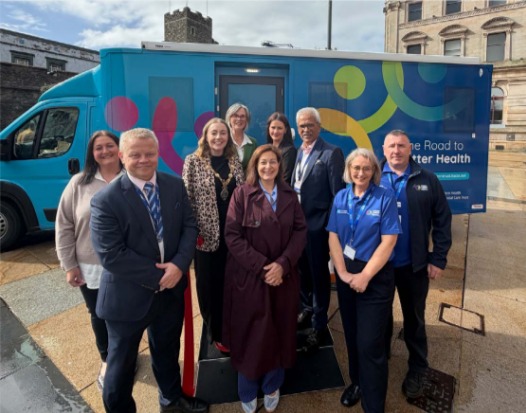 In September 2026, the Western Trust launched Northern Ireland’s first Mobile Health Research Service – a fully equipped clinical research unit bringing trials directly to underserved communities, affectionately known as ‘Bus Lightyear’, a name chosen by children on the local hospital’s children’s ward. Funded through the Northern Ireland Health and Social Care (
Improving UK patient access to global standard of care
Recommendation | 4 | |
|---|---|---|
Strengthen the UK’s viability as a trial location by ensuring the medicines access and adoption environment gives patients globally competitive care, delivered through the commitment to double innovative medicines spend by 2036. | ||
The UK government has made significant commitments to address decades of real-term decline in investment and adoption of innovative medicines, which hampered both patient access to innovative medicines as well as the UK’s competitiveness as an investment location. These commitments include increasing NICE incremental cost-effectiveness ratio (ICER) thresholds for the first time in a quarter of a century, introducing a 15 per cent ceiling on VPAG new medicine clawback rates, and committing to double expenditure on innovative medicines to 0.6 per cent of GDP by 2036 with interim milestones.
Ensuring patients routinely benefit from the most cutting-edge medicines is critical not only for individual patient outcomes, but for the viability of the UK as a trial location for subsequent waves of innovation. As such, delivering on these commitments and setting out a clear roadmap for how the doubling of innovative medicines expenditure by 2036 and interim milestones will be met is key.
The medicines access and adoption environment, alongside regulatory, operational and scientific factors, is a major determinant of trial location and viability. These directly shape where companies place trials, for four reasons:
The prospect of UK launch and patient access. A credible route to NHS use strengthens the case for including UK patients and generating evidence relevant to UK clinical practice. Where launch or reimbursement looks unlikely, companies may exclude the UK or allocate fewer sites and participants.
Availability of the required standard of care. Where comparator treatments specified in global trial protocols are not routinely available or used in the NHS, additional arrangements may be needed to supply them and support their use. This can increase costs, complicate recruitment and, in some cases, prevent UK participation.
Continued access after a trial ends. Sponsors have an ethical responsibility to plan continued treatment for participants who benefit and still need it. Uncertainty over subsequent NHS reimbursement can leave companies facing substantial ongoing treatment costs, affecting whether and at what scale they place trials in the UK.
Long-term investment confidence. Uncertainty over pricing, reimbursement, and future uptake can weaken confidence in the UK as a location for sustained R&D investment, including the sites and infrastructure that support clinical trials.
Medicines access and clinical trials are best understood as a self-reinforcing system rather than two separate policy questions. An improved pricing, reimbursement, and adoption environment would restore the standard of care and conditions that are often prerequisites for trial viability. This would create a virtuous cycle, enabling more trials in the UK, more opportunities for patients and clinicians to engage in research (known to improve patient outcomes and staff satisfaction), significant additional revenue for the NHS, billions of pounds in additional GVA and thousands of additional jobs.
Evidence shows that companies with positive experience of launching medicines that are well adopted in the UK are more likely to prioritise the UK for future trials. The UK’s launch-sequence position has worsened since 2020 according to 62 per cent of companies.24 Delivering improvements in the medicines access and adoption environment is therefore not simply a patient-benefit question. Existing measures to improve study set-up cannot offset an access and adoption environment that has increasingly deterred trial placement over time. Delivering on the government’s commitment to double investment in innovative medicines by 2036 and its ambition to make the UK one of the three fastest countries in Europe for patient access to new medicines, alongside wider and more consistent NHS adoption, would strengthen the UK’s attractiveness for clinical trials and help sustain the benefits of research for patients, the NHS, and the economy.
Ensure the self-sustainability of UK clinical trials research infrastructure
Recommendation | 5 | |
|---|---|---|
Develop self-sustaining funding models that ensure revenue from commercial clinical trials is reinvested in dedicated trial delivery capacity, infrastructure, and workforce, creating a virtuous cycle that increases UK competitiveness while enhancing care and research opportunities for patients. | ||
The establishment of the CRDCs through the VPAG Investment Programme is a genuine structural step change in UK research capacity for commercial clinical trials. Emerging evidence shows that the CRDCs consistently outperform the wider UK site base across all set-up and delivery measures, suggesting that investing in commercial capability is an effective lever to address current delivery challenges. Anecdotally, ABPI members have reported a positive shift in mindset and proactive engagement from locations that had not previously engaged with them on their company’s trial portfolio, as well as from sites that had historically proved challenging for study set-up. The CRDCs contributed 36 per cent of recruitment into pharmaceutical and device interventional trials across the UK in the first quarter of 2026/27. On this trajectory, the centres are becoming an increasingly important contributor to UK recruitment.25
Primary care CRDCs and related decentralised infrastructure in the devolved nations in particular are demonstrating a strong delivery focus and a clear appetite to use funding to establish infrastructure and capabilities that can be sustained beyond the current funding period. As a result, some pharmaceutical companies are taking or exploring a primary care approach to their trial placement and delivery. However, VPAG Investment Programme funding was intended to help establish the CRDCs rather than to meet their running costs in the longer term, and there are no public commitments to sustain CRDC infrastructure once programme funding ends. This is a significant gap, and one that is more pressing for some parts of the UK than others: CRDC funding in Scotland, Wales, and Northern Ireland runs on a five-year timeline rather than the seven-year funding underpinning the England secondary care centres, so the window to agree a transition plan is considerably narrower. England’s primary care CRDCs have a three-year funding period. Without a credible transition strategy for these nations and primary care, the gains made during the investment programme risk being lost, and sites may revert to the fragmented, pre-programme ways of working the CRDC model was established to replace.
In England, the ‘NHS Medium Term Planning Framework 2025’ established that Integrated Care Boards should ensure that clinical trials are proactively supported and all NHS providers must meet the site-specific timeframes of the government’s 150-day clinical trial set-up target and report research income and activity to boards. The 2026 guide to managing research finance in the NHS26 is intended to make it easier for the NHS to undertake research and manage research finances and build capability and capacity to accelerate the pace and scale of research. It also sets out a specific requirement that organisations in receipt of capacity funding through commercial and non-commercial research must use it for research capability and capacity building. The framework for NHS boards on monitoring research activity27 describes the metrics boards should monitor, including clinical trial set-up times, recruitment, and the use of commercial income, and what a high-performing and research-active organisation looks like. The NHS England Outcomes Framework research indicator is increasing recognition of the importance of research.
In Wales the ‘NHS R&D framework’ highlights the importance of research in the NHS and ‘NHS Research and Development Finance Policy 2026’ for health boards or trusts set expectations for health boards and trusts on the costing, management and accountability of research funding and income, providing a consistent financial framework across NHS Wales.28,29 The Scottish Government has committed to growing clinical trials capacity in its ‘Programme for Government 2026 to 2031’ and ‘Life Sciences Strategy for Scotland 2035 Vision.30,31 Scotland’s health boards are encouraged to follow the 2026 guidance on managing research finance in the NHS, but NHS Research Scotland acknowledges that flexibility in the distribution of research income reflects the models used by boards in Scotland. In Northern Ireland the HSC R&D division of the Public Health Agency is responsible for implementing the HSC R&D strategy.32 Northern Ireland established a single regional R&D fund, which is managed through this office. This recognition of research in healthcare delivery and the ambition to invest in the workforce and infrastructure necessary for clinical research across the UK represents a positive direction of travel.
The right incentives and structures should continue to be embedded into NHS operational models during the remaining programme period, so that commercial trial income is consistently reinvested in the research workforce and infrastructure. We recommend that the government and system partners agree nation-specific transition plans for the CRDCs whose funding ends soonest and embed sustainable financial and operational structures into NHS commercial research delivery during the remaining VPAG Investment Programme period, leaving a legacy of high-performing, self-sustaining infrastructure from this global-first investment.
Conclusion
This year’s data shows that concerted action by government, regulators, and the NHS is changing the UK’s performance on clinical trial set-up. However, faster set-up has not yet translated into more patients taking part in commercial contract trials.

Only 3.8%
of all interventional trial participants are in industry clinical trials
Recruitment to those trials in the NHS fell for a fifth consecutive year in 2025/26, to 17,618 participants, and these trials now account for only 3.8 per cent of all interventional trial recruitment. Overall participation in non-commercial interventional research trials in the NHS continues to grow, which shows that people remain willing to take part in research. Undoubtably the complexity of commercial trials is increasing in an era of precision medicines but understanding what is driving falling recruitment at site level is now essential, so that the right changes and support can be put in place and sites are incentivised to set and meet more ambitious recruitment targets. In an increasingly competitive global market, sponsors place trials where every site can open quickly and recruit reliably. The UK must now meet that standard across the whole study, not just at the first site.
The recommendations in this report set out how to make that shift. New metrics and incentives should reward full study delivery and higher, more predictable recruitment. A UK-wide data-enabled clinical trials service would help identify and enrol eligible patients more efficiently, and better measurement of trial diversity would support more inclusive and representative research. Delivering the government’s commitments on medicines access and adoption is also integral to the UK’s viability as a trial location. Finally, the research infrastructure built through the VPAG Investment Programme needs a self-sustaining future, starting with transition plans for the CRDCs for which funding ends soonest.
The political will to strengthen the UK’s position is evident. Increasingly the infrastructure and technology are in place, and huge efforts are being made by those in the NHS and industry responsible for clinical trials delivery. Turning progress on set-up into sustained growth in patient recruitment will require the whole ecosystem to align on the need to deliver commercial contract trials and ensure that as much focus is given to the last patient and last site as the first patient and first site. The ABPI and its members are committed to working with governments across the UK, the NHS and system partners to achieve this, so that more patients have the opportunity to take part in research into the latest innovative treatments, and the NHS and the wider economy can realise the full value of clinical research.
Appendix
Appendix 01: Data sources, definitions and timeframes
Figures 1 and 2
Figures 1 and 2 show the number of participants recruited to UK interventional trials of medicines and medical devices as provided directly by the NIHR Research Delivery Network (RDN) Coordinating Centre, NHS Research Scotland (NRS), Health and Care Research Wales (HCRW), Northern Ireland Clinical Research Network (NICRN), and Northern Ireland Cancer Trial Network (NICTN) for each financial year (1 April to 31 March) from 2017/18 to 2025/26, the latest being 1 April 2025 to 31 March 2026. Figure 1 covers commercial contract studies only; Figure 2 covers all interventional studies, with commercial contract studies shown as a percentage of the total. UK totals are the sum of the figures supplied for England, Scotland, Wales and Northern Ireland. A breakdown by English region and devolved nation is provided in Appendix 2.
All interventional studies include the following three trial types, as defined by the UK Clinical Research Delivery (UKCRD) methodology:
Commercial contract studies: studies sponsored and fully funded by the life sciences industry.
Commercial collaborative studies: studies funded, wholly or in part, by the life sciences industry and sponsored by a combination of life sciences industry and non-commercial organisations. These studies were previously included under the non-commercial category but are now disaggregated to more accurately reflect the scope of commercial research activity. Commercial collaborative studies are supported in the same way as non-commercial studies, including provision of support costs and excess treatment costs through the NIHR RDN and the NHS.
Non-commercial studies: studies sponsored and wholly funded by one or more non-commercial organisations, including medical research charities, universities and public funders.
Figures 3–6 and Table 1
This data covers commercial contract interventional clinical trials related to pharmaceutical drug development and molecular/biological entities in the UK and leading competitor countries, extracted from Citeline’s Trialtrove Clinical Intelligence platform in September 2026. Trialtrove accumulates insights into global trial activity from over 70,000 data sources. It includes public trial registries alongside company sources, data from medical meetings, health authority websites and medical publications.33
Figures 3-6 include both multi-country and single-country trials; Table 1 includes multi-country trials only. Phases have been grouped to simplify presentation:
Phase I includes phase 1, 1a and 1b trials: first-in-human studies in small groups, often healthy volunteers, to assess safety, side effects, dosage range and pharmacokinetics.
Phase II includes phase 2, 2a, 2b and 1/2 trials: studies in larger groups of patients to refine dosing and assess efficacy and safety.
Phase III includes phase 3, 3a, 3b and 2/3 trials: large studies in patients to confirm safety and efficacy at the selected dose, often compared with standard treatment or placebo.
Figures 7-9
Performance data is published monthly by the DHSC and the devolved administrations in the UKCRD Key Performance Indicators Reports. Due to lags in data collection, there is an approximate six-month period where the reported data on site start-up and first-participant recruitment are in flux. Figures 7-9 were extracted from the October 2026 UKCRD performance report to account for the lag between activity and data being recorded in the central system.
Figure 7 presents the study-level, system-wide 150-day set-up metric reported by government as indicator 1 in the UKCRD key performance indicators. This metric starts from the date of initial clinical trial authorisation application submitted to the Integrated Research Application System (IRAS) (unless the applicant has chosen not to attend the first available Research Ethics Committee (REC) meeting and the start date is set two weeks prior to the selected REC meeting). The metric incorporates a single clock stop during regulatory review; the clock stops once the applicant has been sent a request for information and starts again once a complete response has been submitted. The metric ends on the date the first study participant is recruited at the first site.
Studies are excluded from this 150-day metric if they are:
rare disease studies
low-recruiting studies (planned recruitment of fewer than one participant per month)
extension studies
studies that commercial sponsors have formally requested to exempt
Figure 8 is the proportion of commercial contract studies per month that open to participant recruitment within 60 days of receiving regulatory approval. This metric starts on the date of HRA and HCRW approval in England and Wales, NRS approval in Scotland and the equivalent completion of study-wide review in Northern Ireland, or the date the site is selected, whichever is later. The 60-day metric ends on the date the first site is confirmed, that is, when the contract at the first site is signed. Figures 8 and 9 are also reported as a site-level metric for NHS trusts on the UKCRD website.8
Figure 9 is the proportion of studies recruiting their first participant within 30 days of opening. This metric starts on the date the site is ready to start and ends on the date the first study participant is recruited. The number of days between confirmation by a site (Figure 8 endpoint) and a site being ready to start (Figure 9 start) is intended to account for a period of time where a sponsor is preparing for the study to start.
Global and European Firsts
Data on Global and European Firsts are provided by the NIHR. These are updated monthly and may change over time. The figures cited in this report were valid as of October 2026.
Figures 10 and 11
Figures 10 and 11 present median full study activation times (in days) for phase II and III trials, based on data commissioned from Clarivate’s Global Clinical Performance Metrics in August 2026. These are proprietary data drawn from participating companies’ internal data management systems and cover a selection of trials, which are not necessarily the same across countries and do not represent each country’s full trial portfolio. The analysis includes trials that have fully completed enrolment.
Figure 12
Performance data for CRDCs in FY 2025-26, as of May 2026, includes all 35 CRDCs, including the 15 NIHR secondary care CRDCs in England, the 14 NIHR primary care CRDCs in England, the four CRDCs in Scotland, the one nation CRDC in Wales, and the one nation CRDC in Northern Ireland.
CRDC figures are compared to those for the lead host NHS trusts for NIHR CRDCs in England and to all sites delivering studies over the same period.
Figures 13 and 14
Figures 13 and 14 are based on Citeline’s Trialtrove data, extracted in August 2026, and focus on phase II and phase III commercial contract trials of medicines and vaccines. The therapeutic areas in Figures 13 and 14 are those with the highest numbers of trials in the UK in 2025 based on Trialtrove data. For each therapeutic area and phase, the measure is the proportion of trials initiated globally in a year that include at least one UK site, compared across 2022, 2023, 2024 and 2025.
Appendix 02: Additional data on clinical trial recruitment
Number of participants recruited to interventional commercial contract trials in the UK per year, as reported by the NIHR RDN, NRS, HCRW, NICRN, and NICTN (2017/18-2025/26).
NIHR Regional Research Delivery Network / devolved nation | 2017/18 | 2018/19 | 2019/20 | 2020/21 | 2021/22 | 2022/23 | 2023/24 | 2024/25 | 2025/26 |
|---|---|---|---|---|---|---|---|---|---|
East Midlands | 1,068 | 1,004 | 453 | 1,454 | 1,204 | 1,156 | 1,494 | 1,157 | 709 |
East of England | 2,119 | 2,442 | 1,893 | 1,782 | 1,608 | 2,060 | 1,975 | 2,047 | 1,636 |
North East and North Cumbria | 1,304 | 1,244 | 564 | 1,631 | 1,370 | 1,400 | 718 | 737 | 684 |
North London | 3,011 | 8,078 | 1,911 | 5,479 | 2,419 | 2,332 | 2,102 | 2,230 | 1,875 |
North West | 3,672 | 3,844 | 2,618 | 5,009 | 3,943 | 3,511 | 3,051 | 2,120 | 1,926 |
South Central | 3,905 | 2,541 | 1,880 | 2,846 | 1,543 | 1,917 | 1,966 | 1,592 | 1,316 |
South East | 1,183 | 1,116 | 369 | 664 | 420 | 614 | 494 | 451 | 386 |
South London | 1,368 | 1,344 | 1,136 | 2,200 | 1,629 | 1,779 | 1,127 | 1,411 | 1,244 |
South West Central | 770 | 1,056 | 695 | 938 | 1,214 | 1,692 | 1,126 | 794 | 731 |
South West Peninsula | 906 | 1,396 | 641 | 2,153 | 989 | 1,291 | 987 | 1,033 | 833 |
West Midlands | 2,429 | 3,018 | 985 | 1,729 | 965 | 824 | 842 | 829 | 693 |
Yorkshire and Humber | 2,236 | 2,200 | 1,655 | 2,700 | 1,771 | 2,058 | 1,668 | 1,446 | 1,264 |
England total | 23,971 | 29,283 | 14,800 | 28,585 | 19,075 | 20,634 | 17,550 | 15,847 | 13,297 |
Scotland | 6,374 | 3,707 | 8,822 | 3,500 | 7,205 | 4,413 | 3,516 | 3,059 | 3,788 |
Wales | 485 | 651 | 377 | 898 | 368 | 436 | 441 | 485 | 379 |
Northern Ireland | 141 | 119 | 106 | 523 | 119 | 34 | 94 | 116 | 154 |
UK total | 30,971 | 33,760 | 24,105 | 33,506 | 26,767 | 25,517 | 21,601 | 19,507 | 17,618 |
Number of participants recruited to interventional trials in the UK per year, as reported by the NIHR RDN, NRS, HCRW, NICRN, and NICTN (2017/18-2025/26).
Year | 2017/18 | 2018/19 | 2019/20 | 2020/21 | 2021/22 | 2022/23 | 2023/24 | 2024/25 | 2025/26 |
|---|---|---|---|---|---|---|---|---|---|
Industry (commercial contract) research participants in trials of medicines and medical devices | 30,971 | 33,760 | 24,105 | 33,506 | 26,767 | 25,517 | 21,601 | 19,507 | 17,618 |
Total research participants | 234,724 | 262,103 | 238,777 | 795,917 | 515,109 | 383,835 | 387,590 | 460,179 | 465,749 |
Industry (commercial contract) research participants in trials of medicines and medical devices (% of total research participants) | 13.19% | 12.88% | 10.10% | 4.21% | 5.20% | 6.65% | 5.57% | 4.24% | 3.78% |
Appendix 03: Data on full study activation
Country | Year | First site to 25% of all sites | First site to 50% of all sites | First site to 75% of all sites | First site to 100% of all sites | Number of trials | Number of sites |
|---|---|---|---|---|---|---|---|
Italy | 2024 | 29 | 66 | 134 | 282 | 111 | 975 |
Germany | 2024 | 21 | 50 | 115 | 219 | 116 | 1,215 |
UK | 2024 | 27 | 63 | 129 | 210 | 93 | 674 |
Australia | 2024 | 15 | 48 | 97 | 161 | 71 | 520 |
Poland | 2024 | 12 | 36 | 68 | 144 | 77 | 821 |
Spain | 2024 | 13 | 32 | 55 | 126 | 124 | 1,129 |
France | 2024 | 16 | 38 | 66 | 113 | 96 | 842 |
Appendix 04: Key acronyms
Acronym | Meaning |
|---|---|
AMRC | Association of Medical Research Charities |
CRDC | Commercial Research Delivery Centre |
DHSC | Department of Health and Social Care |
FDA | US Food and Drug Administration |
HCRW | Health and Care Research Wales |
HRA | Health Research Authority |
ICER | Incremental cost-effectiveness ratio |
IRAS | Integrated Research Application System |
MHRA | Medicines and Healthcare products Regulatory Agency |
NCVR | National Contract Value Review |
NHS | National Health Service |
NICE | National Institute for Health and Care Excellence |
NICRN | Northern Ireland Clinical Research Network |
NICTN | Northern Ireland Cancer Trial Network |
NIHR | National Institute for Health and Care Research |
NIHR RDN | National Institute for Health and Care Research, Research Delivery Network |
NRS | NHS Research Scotland |
REC | Research Ethics Committee |
UKCRD | UK Clinical Research Delivery |
VPAG | Voluntary Scheme for Branded Medicines Pricing, Access and Growth |
References
Association of the British Pharmaceutical Industry, ‘The value of industry clinical trials to the UK’, December 2024
Department of Health and Social Care, ‘Life Sciences Sector Plan’, July 2025
Department of Health and Social Care, ‘10 Year Health Plan for England: fit for the future’, July 2025
Department of Health and Social Care, ‘Commercial clinical trials in the UK: the Lord O’Shaughnessy review’, May 2023
Department of Health and Social Care, ‘Prime Minister turbocharges medical research’, April 2025
Medicines and Healthcare products Regulatory Agency and Health Research Authority, ‘Launch of clinical trial reforms’, April 2026
Department of Health and Social Care, ‘UK Clinical Research Delivery key performance indicators’, October 2026
UK Clinical Research Delivery, ‘Study set-up: trust level set up report’, September 2026
Department of Health and Social Care, ‘Faster clinical trials bring cutting-edge treatments to patients’, October 2026
National Institute for Health and Care Research, ‘Global and European Firsts – 2025/26 Firsts’, September 2026
International Federation of Pharmaceutical Manufacturers & Associations, ‘Always innovating: pharmaceutical industry facts & figures’, 2025
European Federation of Pharmaceutical Industries and Associations, ‘Assessing the clinical trial ecosystem in Europe’, October 2024
IQVIA Institute for Human Data Science, ‘Global R&D trends 2026’, March 2026
Association of the British Pharmaceutical Industry and Association of Medical Research Charities, ‘Achieving inclusivity in clinical research’, June 2025
CRDC UK Network, ‘National Research Inclusion Strategy’, August 2026
Yin J et al., ‘Advancing precision oncology through innovative and adaptive master protocol designs: statistical, operational, and regulatory perspectives’, Chinese Clinical Oncology, April 2026
US Food and Drug Administration, ‘Considerations for the use of the Plausible Mechanism Framework to develop individualized therapies that target specific genetic conditions with known biological cause’, February 2026
Medicines and Healthcare products Regulatory Agency, ‘MHRA consults on new regulatory framework to make UK a global leader in rare disease therapy development’, May 2026
Office for Life Sciences, ‘Life sciences competitiveness indicators 2026’, March 2026
Accelerating Clinical Trials in the EU (ACT EU), ‘Key performance indicators report’, June 2026
National Institute for Health and Care Research, ‘Costing and contracting using National Contract Value Review (NCVR)’, August 2026
Koufali M, ‘Early progress from the NIHR Industry Hub’, LinkedIn, September 2026
Association of the British Pharmaceutical Industry, ‘Globally competitive UK-wide data-enabled clinical trials: the time is now’, March 2026
Association of the British Pharmaceutical Industry, ‘A year of uncertainty: UK life sciences investment and medicine launches in 2025’, January 2026
CRDC UK Network, ‘CRDC bulletin’, August 2026
NHS England, ‘Managing research finance in the NHS’, September 2026
NHS England, ‘Framework for NHS boards: monitoring research activity’, September 2026
Welsh Government, ‘NHS framework for research and development (WHC/2023/026)’, October 2026
Welsh Government, ‘NHS Research and Development Finance Policy 2026 (WHC/2026/008)’, March 2026
Scottish Government, ‘Life sciences strategy for Scotland: 2035 vision’, October 2026
Scottish Government, ‘Programme for Government 2026 to 2031’, September 2026
Department of Health, Social Services and Public Safety, ‘Research for better health and social care: a strategy for health and social care research and development in Northern Ireland (2016–2025)’, October 2026
Citeline, ‘Trialtrove+’, 21 October 2026
-
PublisherABPI
-
Last reviewed date05 November 2026
-
Next review date05 November 2031