-
ABPI Website

-
Partnerships
-
Patient involvement
-
Charity-Industry Partnership Case Study Library
- Earlier diagnosis, better beginnings for babies with SMA
Earlier diagnosis, better beginnings for babies with SMA

Patient organisations and company partners
Novartis UK and SMA UK
Summary
The partnership focused on improving understanding of spinal muscular atrophy (SMA) and the importance of early diagnosis through newborn screening. The work took place during a critical period of national policy discussion, when delayed diagnosis continued to have a significant impact on outcomes for babies and their families.
SMA UK, the leading national patient organisation for SMA in the UK, played a central role in ensuring patient and family perspectives were responsibly and accurately reflected throughout the activity. By bringing together lived experience, clinical insight and health system evidence, the partnership supported informed, balanced dialogue among policymakers and wider
Project type
Disease awareness and policy
Project focus
Educating policy makers and the public on newborn screening for SMA
Project overview
The partnership focused on improving understanding of spinal muscular atrophy (SMA) and the importance of early diagnosis through newborn screening. The work took place during a critical period of national policy discussion, when delayed diagnosis continued to have a significant impact on outcomes for babies and their families.
SMA UK, the leading national patient organisation for SMA in the UK, played a central role in ensuring patient and family perspectives were responsibly and accurately reflected throughout the activity. By bringing together lived experience, clinical insight and health system evidence, the partnership supported informed, balanced dialogue among policymakers and wider stakeholders.
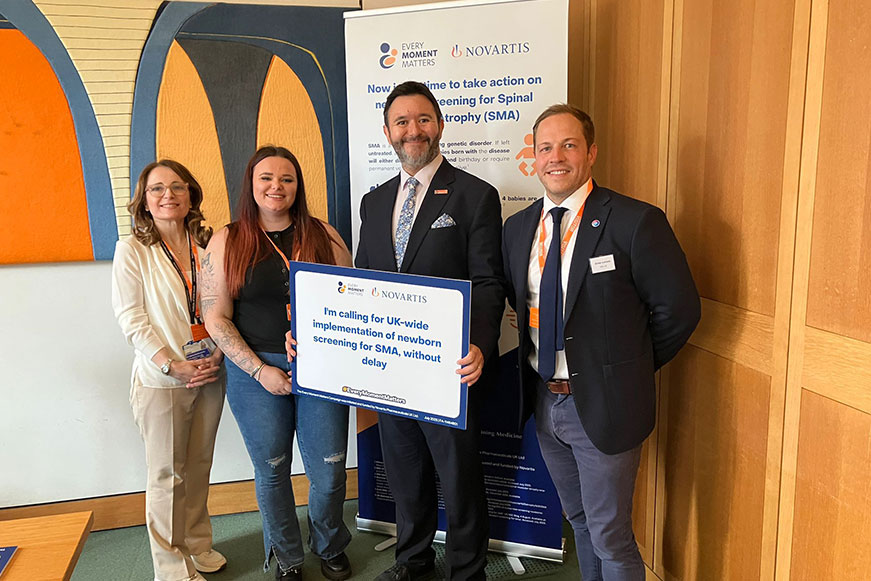
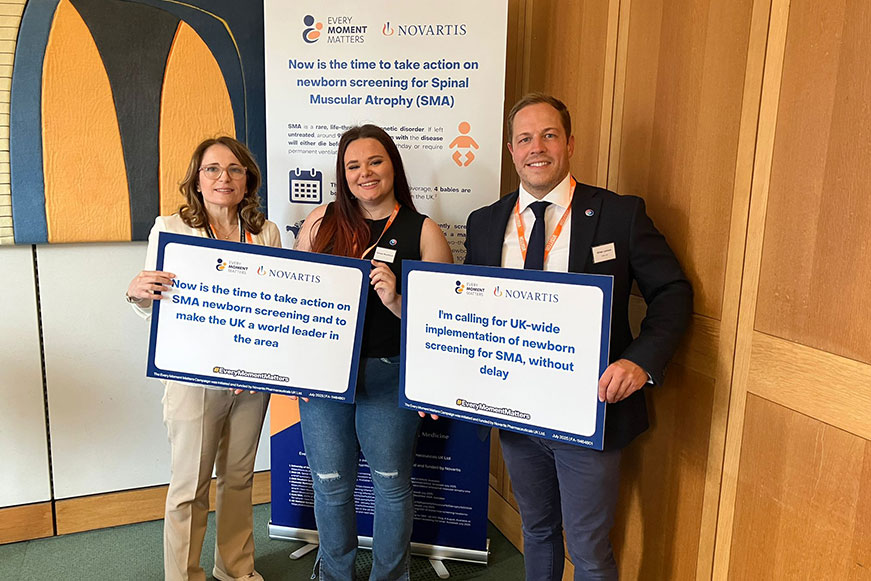
Images provided by SMA UK
Finding the right partner
Given the sensitivity of newborn screening policy, collaboration needed to be grounded in strong patient legitimacy, independence and credibility.
SMA UK was an essential partner. It represents the lived experience of individuals and families affected by the condition and holds long‑standing credibility across the clinical, research and policy landscape.
Partnering with SMA UK was vital to ensuring patient and family perspectives were central to the work — not just present but actively shaping how SMA and the impact of delayed diagnosis were understood and discussed.
Making contact
Novartis UK reviewed the policy context for newborn screening, publicly available evidence, and existing insights into the patient and family experience of SMA.
Early conversations focused on understanding SMA UK’s priorities and perspectives, establishing clear boundaries, and aligning on shared principles rather than specific activities.
This exploratory phase helped build mutual understanding and trust, supported by regular check‑ins to ensure continued alignment. It provided a strong foundation for partnership activity that remained appropriate, balanced and centred on improving informed dialogue among policymakers and wider stakeholders.
Scoping
Both partners agreed that the collaboration should be educational in nature, supporting informed understanding of SMA and early diagnosis rather than advocating for predefined policy outcomes.
SMA UK played a central role in shaping the scope of activity, drawing on insights from across its community to identify priority themes and ensure patient and family perspectives were embedded from the outset.
Flexibility was built into the approach to allow activity to adapt as policy timelines evolved, while maintaining consistency in principles, independence and governance.
Contracting
Contracting was carried out on a project-by-project basis, with an umbrella commitment to partner together to achieve nationwide access to newborn screening for SMA, sooner.
This approach ensured that each activity could be appropriately defined, reviewed and approved in line with its specific scope and objectives.
Implementation
The work was delivered through a phased and collaborative approach aligned to developments in newborn screening policy across the UK.
Activity included parliamentary engagement across Westminster and the devolved administrations, through exhibitions, meetings and roundtable discussions, reflecting the need to engage with stakeholders operating at different levels of the health system.
It also engaged the UK media, to raise awareness of the issue with the general public. This approach enabled patient and family experiences to be presented alongside clinical and health-system evidence, supporting balanced and credible dialogue throughout the project.
Throughout delivery, SMA UK shaped content and shared lived experience, while Novartis UK supported planning, coordination and delivery of compliant, educational engagement.
Regular review points allowed activity to adapt in response to external developments while maintaining alignment and trust.
Impact of the project
The programme contributed to increased awareness of SMA and the case for earlier diagnosis, strengthened collaboration across the patient and clinical landscape, and supported progress towards policy outcomes. This included the approval of a two‑year newborn screening pilot in Scotland and shortened timelines for the in‑service evaluation process in England.
The partnership established a credible and sustainable framework for ongoing engagement, reinforcing how industry and patient organisations can work together responsibly in the public interest.
A key challenge in delivering the partnership was navigating uncertainty within the evolving policy environment for newborn screening. This required ongoing flexibility in planning and careful coordination to maintain momentum, while ensuring all activity remained appropriate, balanced and compliant.
Reflecting on the partnership, several key learnings emerged:
- Early and deliberate scoping is essential when working in sensitive policy areas, helping to ensure clarity of purpose and protect organisational independence.
- Flexibility within clear governance frameworks enables partnerships to adapt responsibly to evolving external contexts without compromising compliance.
- Meaningful involvement of patient organisations at a strategic level supports accurate and responsible integration of lived experience, rather than retrospective or tokenistic input.
- Regular, honest, two-way communication and review points are critical to maintaining alignment and confidence as activity evolves over time.
Overall, the partnership reinforced the importance of well-governed, evidence-led collaboration in supporting informed dialogue on complex healthcare policy issues.
Key enablers included early alignment on shared purpose and principles, clear definition of roles and boundaries, and a strong foundation of trust between partners. Establishing these elements at the outset supported effective collaboration as policy discussions progressed and external timelines shifted. Communications and Patient Advocacy, Novartis UK
The partnership demonstrated the value of structured, well‑governed collaboration in supporting informed discussion in a complex and sensitive policy area. Embedding patient and family perspectives throughout the programme avoided retrospective or tokenistic inclusion and ensured lived experience was integrated at a strategic level. Giles Lomax, CEO, SMA UK
Novartis approval: FA-11673531
Last reviewed date: 12 May 2026
Next review date: 12 May 2029