
Our vision for Northern Ireland
The pharmaceutical industry, part of the life sciences sector, has the potential to help the next Northern Ireland government drive both the health and the wealth of Northern Ireland. The sector already makes a significant contribution to Northern Ireland's research and development (R&D) ecosystem, and the medicines and vaccines our industry develops are transformative for public health, patients, and Health and Social Care (HSC).
This plan sets out the ABPI's vision for improving patients' health outcomes, supporting the health system, and stimulating inward investment and economic growth. Implementing these proposals will create a virtuous cycle where investment in medicines and research accelerates future waves of innovation and attracts an increased share of global R&D, while improving the health of the population.
Northern Ireland has the potential to position itself as a beacon for inward investment, given recent strides in health data and digital capabilities, and in clinical research. However, to stand out in a highly competitive UK and international investment environment, Northern Ireland must be strategic and focus on clear areas of strength and unique selling points.
Timely and consistent adoption of evidence-based innovative medicines is a strategic opportunity for Northern Ireland to transform patient outcomes, reduce economic inactivity, and reduce pressure on front-line HSC services.
Our asks of Northern Ireland's leaders
To turn this vision into reality, we ask the next Northern Ireland government to:
Make Northern Ireland a beacon for patient access to innovative medicines and vaccines, through:
investing in clinical research
accessible health data
faster adoption and equitable availability of innovative medicines and vaccines
Underpinned by: Establishing trusted partnerships between HSC, government, and industry to drive a unified approach to health investment.
Enabled by: Modernising value assessment for medicines and vaccines to fully reflect their clinical, economic, and societal impact.
Future-proofed by: Strengthening horizon scanning and embedding system-wide readiness for the next generation of innovative treatments.
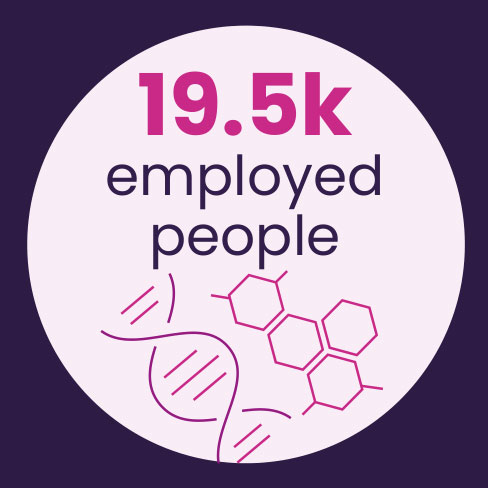
19.5k Life sciences industry: employed people The life sciences industry in Northern Ireland employs over 19,500 people.
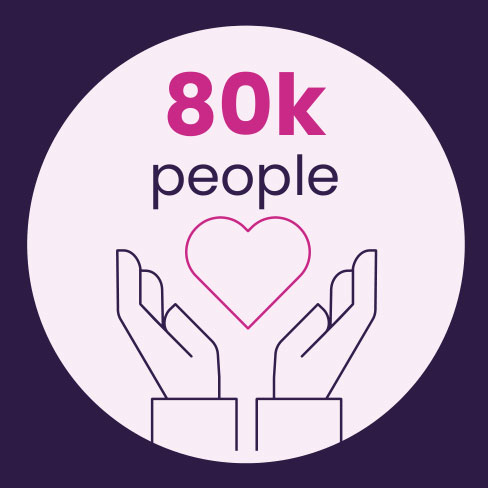
80k Health and social care: people The wider health and social care system employs more than 72,000 people.
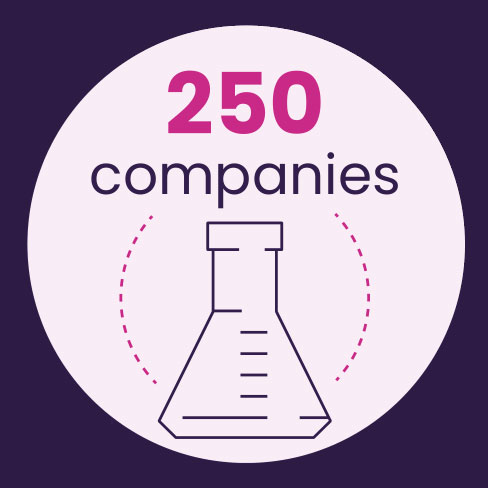
250 Life and health sciences: companies Northern Ireland has over 250 companies dedicated to life and health sciences.¹
How we get there
Making Northern Ireland a beacon for patient access to innovative medicines and vaccines
Investing in the workforce and infrastructure needed to reliably deliver efficient clinical research across HSC.

Creating a publicly trusted system for access to Northern Ireland health and care data by accredited industry and academic researchers that integrates with wider UK health data to deliver improved health and economic growth.
Ensuring timely and equitable availability of innovative medicines and vaccines to patients across Northern Ireland in a system that is structured, transparent and has embedded sustainable planning and commissioning processes.

Underpinned by: Establishing trusted partnerships between HSC, government, and industry to drive a unified approach to health investment.
Enabled by: Modernising value assessment for medicines and vaccines to fully reflect their clinical, economic, and societal impact.
Future-proofed by: Strengthening horizon scanning and embedding system-wide readiness for the next generation of innovative treatments.
Research
Investing in the workforce and infrastructure needed to reliably deliver efficient clinical trials across HSC.
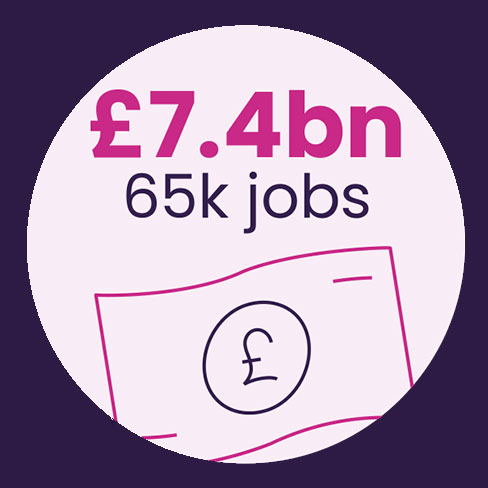
In 2022, industry clinical trials contributed £7.4 billion of gross value added (GVA) to the UK economy, including Northern Ireland, and supported a total of 65,000 jobs.1
Make Northern Ireland a beacon for patient access to innovative medicines and vaccines: Research
The challenge
The Northern Ireland government has the opportunity to make Northern Ireland a destination of choice for industry R&D into new medicines and vaccines. Participation in world-leading industry clinical trials brings major economic benefits, alongside increasing revenue for HSC and improving clinical expertise and patient outcomes.
Industry clinical trials deliver early access to treatments, economic value and HSC capacity. For patients, this can mean access to potentially life-changing treatments years earlier. For clinicians, it provides an opportunity to work at the forefront of science and improve care for future generations.
Companies looking to place clinical research will seek an end-to-end ecosystem that supports innovation from the lab bench to the bedside. To realise its potential, Northern Ireland's academic strength, clinical leadership, integrated health and care data assets and growing life sciences capabilities must be supported by efficient trial delivery processes which enable fast trial set-up and reliable patient recruitment. These must sit alongside clear pathways to rapid and consistent adoption of proven, standard-of-care innovations, creating a virtuous cycle that makes Northern Ireland increasingly attractive for industry investment and placement of highly skilled jobs.
Meeting the challenge: our asks of the Northern Ireland government:
ensure revenues generated through industry clinical trials are reinvested into clinical research delivery capacity and infrastructure, including ensuring the self-sustainability of Northern Ireland's Commercial Research Delivery Centre (CRDC) beyond the current Voluntary Scheme for Branded Medicines Pricing, Access and Growth (VPAG)2 Programme term
develop and deliver an international outreach programme to promote Northern Ireland's unique combination of assets as a destination for clinical research
implement policies which ensure research can be delivered seamlessly across HSC, between Trusts, primary care and cross-border, including addressing existing barriers which inhibit patient access, or specialist workforce deployment to research sites
ensure revenues generated through industry clinical trials are reinvested into clinical research delivery capacity and infrastructure, including ensuring the self-sustainability of Northern Ireland's Commercial Research Delivery Centre (CRDC) beyond the current Voluntary Scheme for Branded Medicines Pricing, Access and Growth (VPAG)2 Programme term
develop and deliver an international outreach programme to promote Northern Ireland's unique combination of assets as a destination for clinical research
implement policies which ensure research can be delivered seamlessly across HSC, between Trusts, primary care and cross-border, including addressing existing barriers which inhibit patient access, or specialist workforce deployment to research sites
How industry is supporting and funding clinical research capacity in Northern Ireland:
The HSC R&D Division has received funding of £13.5 million to be spent over five years to deliver on the objectives of the VPAG Investment Programme in Northern Ireland by establishing a CRDC. The funding has been used to bolster existing clinical research delivery infrastructure. The Northern Ireland CRDC is not a single centre but a combination of different pieces of infrastructure throughout the NI clinical research landscape with a central management hub for the initiative within the HSC R&D Division.
Data
Creating a publicly trusted system for access to Northern Ireland health and care data by accredited industry and academic researchers that integrates with wider UK health data to deliver improved health and economic growth.
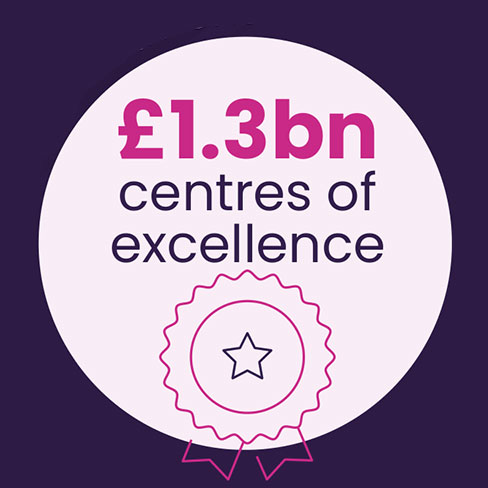
Over the next decade, Northern Ireland government investment of £1.3 billion will help create global centres of excellence across life and health sciences allowing companies to collaborate on projects advancing digital health, clinical trials, personalised medicine, diagnostics, AI, and big data.3
Make Northern Ireland a beacon for patient access to innovative medicines and vaccines: Data
The challenge
Health data can transform diagnosis, treatment and monitoring – and Northern Ireland's cradle-to-grave datasets offer a chance to attract investment, advance research and improve patient outcomes. However, data is often difficult for researchers to access and consequently underused – a missed opportunity for patient care and for Northern Ireland's leadership in life sciences.
Northern Ireland's HSC Data Strategy4 rightly recognises the value of responsible data use, but avoidable barriers still hinder safe, ethical access for research and innovation, risking the confidence of the public, the research community and investors.
Historically, Northern Ireland has had no mechanism for industry researchers to directly access health data as this was only possible through a tripartite arrangement with an academic. The development of the Northern Ireland Trusted Research Environment (NITRE) lays the pathway for a safe-haven for industry researchers to access data. Critical to its success will be fulfilling the long term objective of the NITRE to facilitate a fully integrated, longitudinal primary and secondary care data set for health and social care, which is accessible for research through a Secure Data Environment (SDE) for secondary use purposes.
Meeting the challenge: our asks of the Northern Ireland government:
work with the UK-wide Health Data Research Service (HDRS) to identify any legal and policy barriers that limit the extent to which Northern Ireland can be fully integrated with the UK-wide HDRS
encourage a shared vision to promote the use of the NITRE for industry with appropriate governance controls being clear and understood
support industry researchers as valued and trusted partners in utilising health data to provide improved patient outcomes and develop innovative treatments
How industry is supporting high levels of transparency and building public trust in the industry’s use of health data
Health data is crucial for research and developing innovative, safe, and effective medicines. ABPI members have committed to a set of principles when analysing and using health data.5 These complement the governance processes established by the data custodians. The pharmaceutical industry has decades of experience in handling health data - collecting, managing, analysing and reporting on specified clinical data, in the process of carrying out clinical trials. The industry routinely provides this data to regulatory authorities as well as publishing it in aggregated, anonymised form.
Patient Access
Ensuring timely and equitable availability of innovative medicines and vaccines to patients across Northern Ireland in a system that is structured, transparent and has embedded sustainable planning and commissioning processes.
"The Department's priority is to ensure that the population of NI can benefit from advances in medicine and science on an equitable basis compared to those living elsewhere in the UK."6
Northern Ireland Valuing Medicines Strategy 2025.
Make Northern Ireland a beacon for patient access to innovative medicines and vaccines: Patient Access
The challenge
Investment in medicines and vaccines is a driver of economic growth. Faster adoption of clinically effective and cost-effective medicines supports a healthier, more productive population, strengthens Northern Ireland's offer to global research investors and helps create a more sustainable HSC.
Realising the value of innovative medicines and vaccines has been challenging in Northern Ireland, with a history of these treatments being perceived as a cost rather than a solution to reducing the human and economic cost of ill health. Inconsistency in commissioning timelines, communication issues, gaps in policy coverage, and a lack of robust data throughout Northern Ireland have resulted in medicines access processes that are misaligned with other parts of the UK. This has also caused delayed access to medicines and low to no adoption in certain cases.
Chronic underinvestment in innovative medicines and low and slow adoption of proven innovations are a major reason for poor health outcomes and high economic inactivity in the UK and Northern Ireland.7 By working collaboratively with the sector, there is a major opportunity to turn this around.
Between February and April 2026, the most common reason for economic inactivity among the working age population was ‘long-term sick’, accounting for 36.7 per cent of the total economically inactive population aged 16 to 64.8
Meeting the challenge: our asks of the Northern Ireland government:
fully implement the recommendations from the 2025 Review of Access Pathways for Medicines Within Health and Social Care, Northern Ireland9
view medicines policy as a mechanism for enabling economic growth and investment
ensure that Northern Ireland patients can benefit equitably from early access to medicines schemes, and ensure there is a clear strategy for genomic testing and access to personalised medicines
How industry is supporting and funding medicine access advances in Northern Ireland:
The Northern Ireland Department of Health secured investment, through the VPAG Investment Programme, to support process and policy improvements which accelerate patient access to treatment. These are captured in the Review of Access Pathways for Medicines Within Health and Social Care, Northern Ireland, published in October 2025.
This review focuses on horizon scanning and financial forecasting, improved assessment methods and processes for access to medicines, more effective data-capture and visualisation to support decision-making and better medicines optimisation, and enhanced support of implementation of new medicines.
Underpinned by: Establishing trusted partnerships between HSC, government, and industry to drive a unified approach to health investment
The government should encourage HSC to view industry partnerships as standard practice, built on trust, a history of effective outcomes, and supported by clear ABPI guidance, ethical frameworks for collaboration, and the ABPI Code of Practice.
In October 2025, the ABPI in partnership with Northern Ireland Confederation for Health and Social Care (NICON) published; 'Working together: Guidance to support transformative industry partnerships with Northern Ireland's Health and Social Care system'. This guidance offers HSC and industry a practical and values-led framework for building well-governed partnerships that are strategic, sustainable, and focused on better outcomes for patients and the population.10
By encouraging a culture of partnering with industry across HSC, the benefits will be threefold: better patient outcomes, reduced pressures within HSC, and opportunities to embed sustainable, efficient innovative patient pathways.
The Medicines Optimisation Innovation Centre (MOIC) exists to support HSC to identify areas of opportunity where medicine-related innovations can be implemented. MOIC communicates demand signals to industry on where partnerships could be most impactful and ensures appropriate governance mechanisms are embedded.
Enabled by: Modernising value assessment for medicines and vaccines to fully reflect their clinical, economic, and societal impact
The government should ensure that the full value of innovative medicines and vaccines is recognised both in reduced costs associated with disease progression and in improved economic productivity.
Detailed data on medicine spend, separating generic from branded medicine spend alongside the wider medicinal services spend, will give a clearer picture of Northern Ireland's total medicine spend.
Through improved data collection, and partnership with industry, a clearer evidence base on economic productivity benefits, and reduction in HSC front-line burden can be established, alongside patient benefit. This would enable improved recognition of medicines as an investment rather than a cost.
Northern Ireland's newly formed Academic Health & Economic Partnership (AH&EP) led by the Department of Health and the Department for the Economy has the potential to bring together HSC, academia, industry and communities to develop, test and scale innovation that improves health outcomes and drives sustainable economic growth for Northern Ireland.
Future-proofed by: Strengthening horizon scanning and embedding system-wide readiness for the next generation of innovative treatments
The government should ensure that Northern Ireland is ready to swiftly and seamlessly adopt new treatments, ensuring Northern Ireland patients receive comparable standards of care with other developed nations.
Policies and processes must allow for complete system readiness for innovative treatments, including companion diagnostics and extending genomic capabilities.
Ensuring Northern Ireland is actively involved in research into newer treatments, will generate practical insights into how and what is needed to effectively deploy innovations at scale across the health system.
Increasing transparency and publishing site and Trust-level performance data on commercial trial delivery, alongside reporting of associated income where appropriate, will highlight where centres of excellence exist, promote sharing of best practice, and incentivise improved research performance.
Industry partnerships with Health and Social Care in Northern Ireland: some examples
AstraZeneca and Northern Ireland Department of Health, the Department for the Economy and the Health Innovation Research Alliance NI (HIRANI) have signed a strategic Memorandum of Understanding aimed at transforming healthcare delivery and improving health outcomes for the people of Northern Ireland. This milestone partnership marks the first time Northern Ireland's health system and vibrant Life Sciences sector has sought to strategically engage with a global biopharmaceutical company in this manner.11
Strategic partnership aims include:
evolving healthcare models towards a person-centred approach that recognises the full value that healthcare brings to patients, society, and a sustainable life sciences industry
improving health outcomes for Northern Ireland citizens through the adoption of innovation at scale
Boehringer Ingelheim supporting a pharmacist-led service for people living with type 2 diabetes in East Belfast to optimise their care, while upskilling healthcare professionals in diabetes management. A partnership with the Federation of Family Practices East Belfast.12
Novartis is investing in healthcare sustainability in Northern Ireland through a portfolio of collaborative and joint working projects designed to improve patient outcomes, strengthen services and deliver care closer to home.
Working across all five Health and Social Care Trusts, Novartis has supported an end-to-end breast cancer service mapping exercise, and is now funding specialist nursing roles, pathway redesign and the development of innovative digital solutions such as electronic patient-reported outcome measures (ePROMs).13 Taken together, these interventions aim to improve the patient experience, reduce strain on the system and deliver improved breast cancer outcomes for patients.
In neurology, collaborative projects have helped address pressures in multiple sclerosis services through pathway mapping and support for additional specialist nursing capacity to appropriately provide additional review clinics to manage the backlog in care.14 Novartis has also partnered with the Southern Health and Social Care Trust on a cardiovascular disease prevention programme, supporting multidisciplinary teams to improve lipid management in order to reduce future cardiovascular events.15 All of these initiatives are aimed at working together to improve care for patients and Novartis' aim to become a transformational partner for the healthcare system.
AstraZeneca and Northern Ireland Department of Health, the Department for the Economy and the Health Innovation Research Alliance NI (HIRANI) have signed a strategic Memorandum of Understanding aimed at transforming healthcare delivery and improving health outcomes for the people of Northern Ireland. This milestone partnership marks the first time Northern Ireland’s health system and vibrant Life Sciences sector has sought to strategically engage with a global biopharmaceutical company in this manner.11
Strategic partnership aims include:
evolving healthcare models towards a person-centred approach that recognises the full value that healthcare brings to patients, society, and a sustainable life sciences industry
improving health outcomes for Northern Ireland citizens through the adoption of innovation at scale
Boehringer Ingelheim supporting a pharmacist-led service for people living with type 2 diabetes in East Belfast to optimise their care, while upskilling healthcare professionals in diabetes management. A partnership with the Federation of Family Practices East Belfast.12
Novartis is investing in healthcare sustainability in Northern Ireland through a portfolio of collaborative and joint working projects designed to improve patient outcomes, strengthen services and deliver care closer to home.
Working across all five Health and Social Care Trusts, Novartis has supported an end-to-end breast cancer service mapping exercise, and is now funding specialist nursing roles, pathway redesign and the development of innovative digital solutions such as electronic patient-reported outcome measures (ePROMs).13 Taken together, these interventions aim to improve the patient experience, reduce strain on the system and deliver improved breast cancer outcomes for patients.
In neurology, collaborative projects have helped address pressures in multiple sclerosis services through pathway mapping and support for additional specialist nursing capacity to appropriately provide additional review clinics to manage the backlog in care.14 Novartis has also partnered with the Southern Health and Social Care Trust on a cardiovascular disease prevention programme, supporting multidisciplinary teams to improve lipid management in order to reduce future cardiovascular events.15 All of these initiatives are aimed at working together to improve care for patients and Novartis’ aim to become a transformational partner for the healthcare system.
Endnotes
Invest Northern Ireland, Precision medicine report, March 2026.
ABPI, 2024 Voluntary Scheme for Branded Medicines Pricing, Access and Growth (VPAG), January 2024.
Invest Northern Ireland, Precision medicine report, March 2026.
HSC, Data Strategy HSC Northern Ireland 2022-2030, June 2023.
ABPI, The principles for analysis and use of health data by ABPI members, September 2023.
Northern Ireland Department of Health. Valuing Medicines Strategy. September 2025.
NICON, Economic inactivity webinar, Building a collective approach across the public sector, June 2026.
NISRA, Northern Ireland Labour Market Report, June 2026.
Northern Ireland Department of Health, A review of access pathways for medicines within health and social care, Northern Ireland, October 2025.
NICON/ABPI, Working together: Guidance to support transformative industry partnerships with Northern Ireland's Health and Social Care system, October 2025.
AstraZeneca and Northern Ireland, Forge New Strategic Partnership | (HIRANI) Health Innovation Research Alliance Northern Ireland, April 2026.
ABPI and Boehringer Ingelheim, A partnership with the Federation of Family Practices East Belfast, September 2026.
Novartis, Re-imagining Care Pathways Collaborative Working Projects - Breast Cancer Services, Southern Health and Social Care Trust Portadown, Belfast Health and Social Care Trust Belfast, Northern Health and Social Care Trust Antrim, South Eastern Health and Social Care Trust, Belfast, Western Health and Social Care Trust, Londonderry, all accessed Aug 2026.
Novartis, Re-imagining Care Pathways Collaborative Working Project, August 2026.
Novartis and Southern Health & Social Care Trust Lipid Optimisation Collaborative Working Project, August 2026.
-
ThemeDevolved Nations - Northern Ireland
-
KeywordsNorthern IrelandDevolved Nations - Northern Ireland
-
PublisherABPI
-
Last reviewed date02 October 2026
-
Next review date02 October 2031